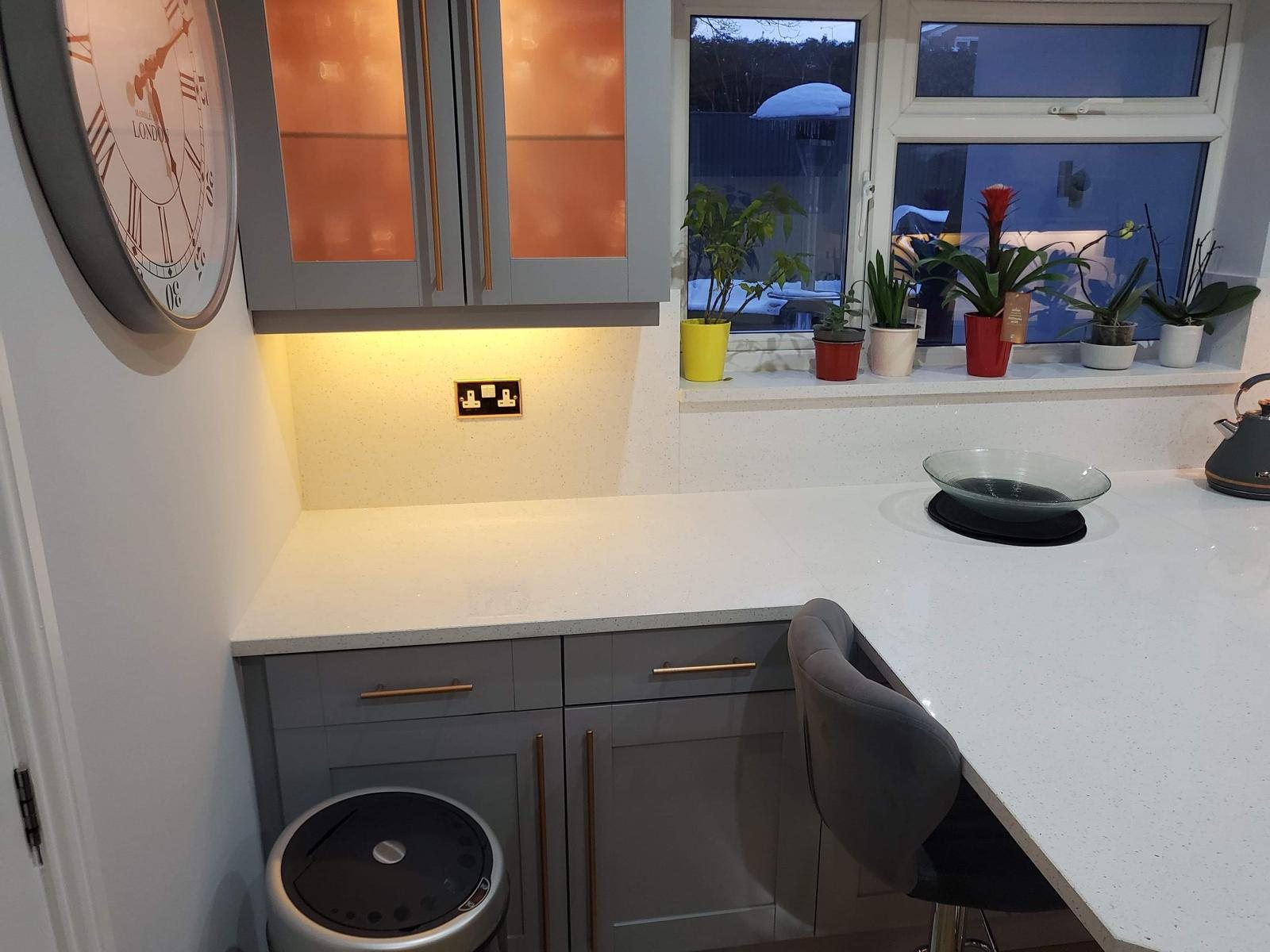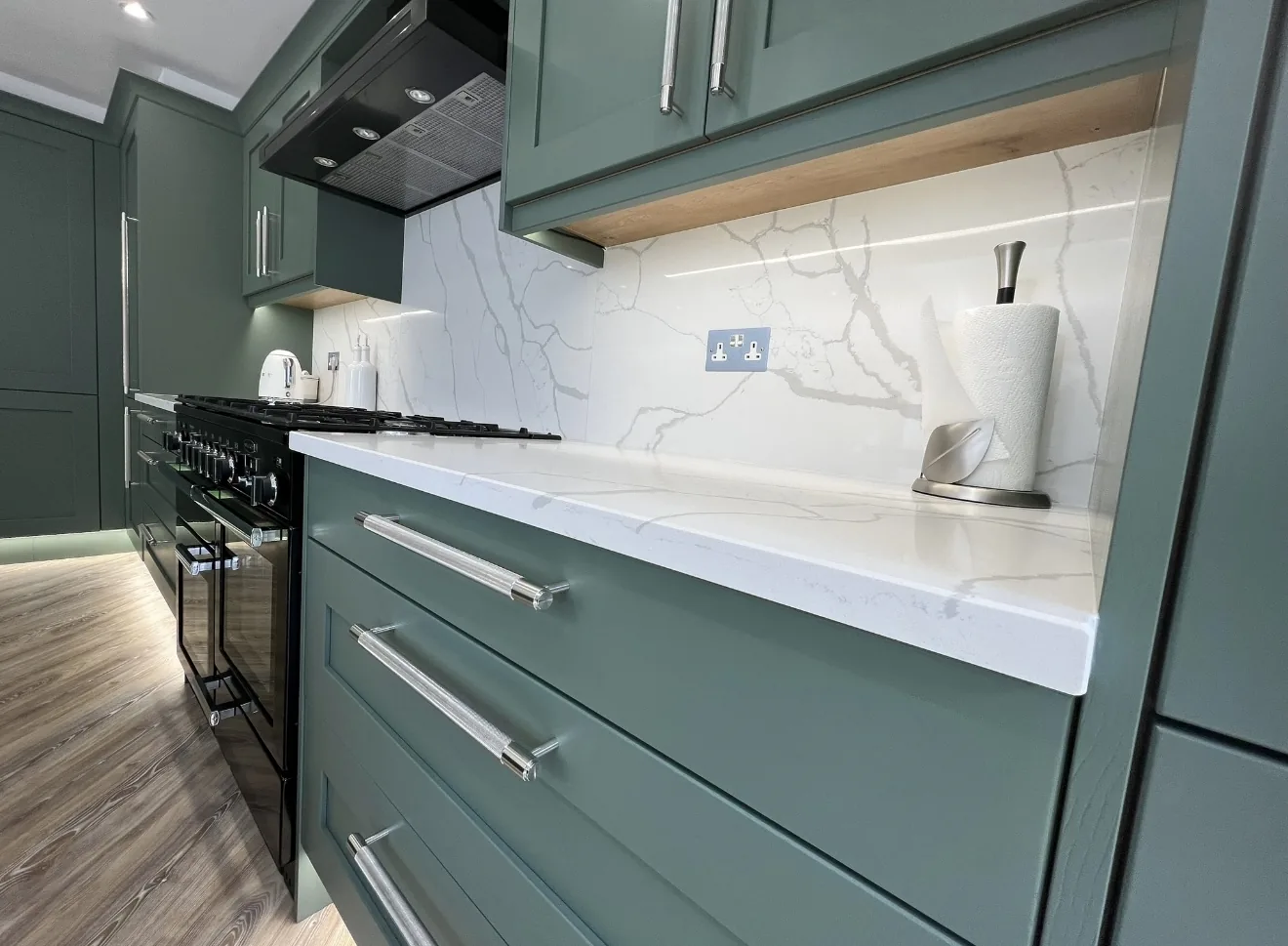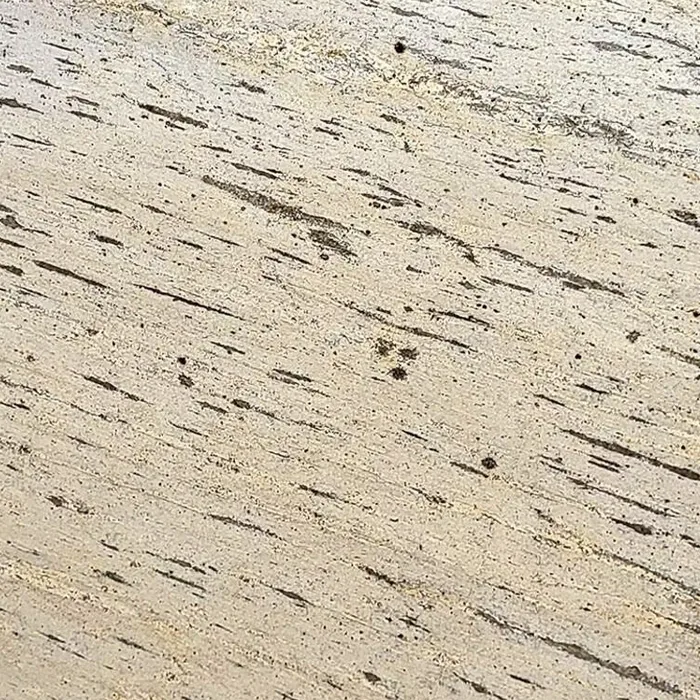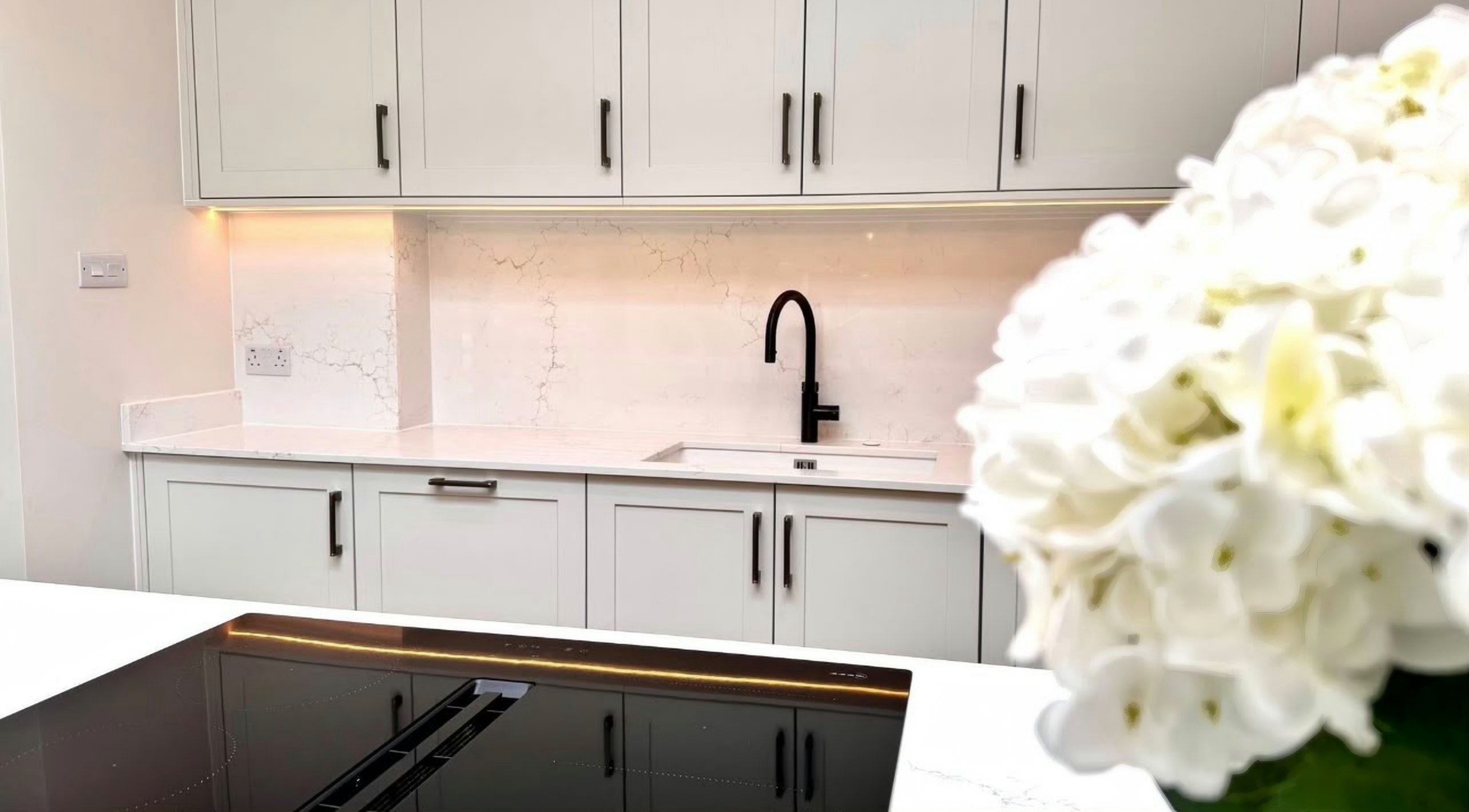
Before you put anything on the mark, work out what it is. A stain is something absorbed into the stone, sitting under the surface. An etch is damage to the surface itself, where something has eaten or dulled the finish. They look identical to somebody standing over the worktop and need opposite treatments: a stain has to be drawn back out, an etch has to be re-polished. Attacking an etch with a stain remover does nothing; attacking a stain with an abrasive does permanent harm. What follows sets out the method material by material, as Worktop Worx would explain it.
Key points
- A stain is absorbed and can be drawn out; an etch is surface damage and has to be re-polished
- Look across the mark with a light behind it: gloss unchanged means stain, dull and slightly textured means etch
- Blot rather than wipe, and deal with a spill before it dries. That is most of the job
- The poultice method is a granite technique. It does nothing on quartz or sintered stone, because nothing has soaked in
- A scorch on quartz is damage to the resin and does not come out, whatever the bottle says
01 / 08
Is it a stain or an etch? How to tell in ten seconds
Get your eye down to worktop level and look across the mark rather than down at it, with a light behind it. A stain is a discoloration seen through an unchanged surface: the reflection runs across it uninterrupted, the gloss inside matches the gloss outside, and it is usually darker than the stone. An etch is the opposite. The colour has not changed but the shine has, so the mark appears and disappears as you move your head, and often reads lighter.
Then use a dry fingertip. A stain feels like nothing, because there is nothing there to feel. An etch has a very slight texture, marginally rougher or softer than the polish either side, and on a honed finish you may feel it before you see it. If it changes with the light and you can feel it, no chemical helps.
02 / 08
The first minute, which is usually the whole answer
Almost every stain we get asked about was preventable in the sixty seconds after it happened. A spill lifted while still wet leaves nothing behind on any of the three materials. One that dries has had time to move into the stone, and you are into recovery rather than cleaning.
Blot, do not wipe. Press folded kitchen paper straight down onto the spill and lift it, then repeat until nothing more transfers. Wiping turns a 20mm spot of red wine into a 200mm smear. Once the bulk is off, wash with warm water and washing-up liquid, rinse and dry. Drying matters more than people expect: standing water is itself a source of marks on granite, and in a hard-water area it leaves limescale spotting.
The things that punish delay hardest are cooking oil, red wine, turmeric and a tin left standing in a puddle. If one of those goes over mid-dinner, spend the ten seconds: it is the difference between a wipe and a weekend.
03 / 08
How each material actually behaves
One set of instructions cannot be right for all three. Quartz is non-porous. Sintered surfaces including Dekton have effectively zero porosity. Granite is porous to a degree that varies enormously between stones.
On quartz, genuine staining is rare. It is ground stone bound in resin and pressed, so there is nowhere for a liquid to go, and what looks like a stain is nearly always residue on top: a dried film, dye off a plastic board or a cheap tea bag, aluminium off a pan base. All of that comes off the surface. The exceptions are chemical and thermal: a strong alkaline or acidic product left standing dulls the resin, and heat scorches it. Neither is a stain.
Cleaning quartz day to day, as opposed to rescuing it, has its own guide: the routine, the products that dull the resin and how to lift limescale, grease and metal marks.
On granite, absorption is real. The stone is sealed at fabrication and topped up over its life, so a stain usually means the sealer has worn thin there or the spill sat long enough to get past it. Oil is the classic case: an irregular dark patch rather than a neat ring, often still creeping a day later. Standing water leaves a dark patch that fades as it dries. That is not a stain but a warning that the area is drinking.
On sintered stone, marks are almost always on the surface rather than in it. There is no open pore structure and no resin to scorch, so most sintered worktops are cleaned rather than treated. What does show up is metal marking on matt and textured finishes, where a pan leaves a grey smear that reads as a scratch and is not. Matt takes more work than polished, because there is more surface for residue to key into.
| The mark | Quartz | Granite | Sintered / Dekton |
|---|---|---|---|
| Fresh oil or grease | Blot, then washing-up liquid. Nothing has gone in | Blot without wiping, then degrease. If the stone has darkened, poultice | Blot and degrease. Nothing absorbs |
| Wine, tea, coffee, turmeric | Blot and wash. Dried residue lifts with a cream cleaner | Blot at once. A shadow after washing needs an oxidising poultice | Colour left after washing is film, not absorption |
| Rust from a tin or pan | Surface deposit. Cream cleaner and a pad | Poultice with a rust remover made for stone. Never a descaler | Surface deposit. Stone cleaner and a soft pad |
| Ink and marker | Mild solvent on a cloth, tested first | Solvent poultice. Do not flood the area | Mild solvent on a cloth, then wash off |
| Water rings, limescale | Warm water and washing-up liquid, then dry | The same. A lingering dark patch means re-seal | The same, but matt needs longer |
| Heat mark or scorch | Resin damage. It does not come out | Usually deposit, not damage. Clean and reassess | Rare. Nothing in it can scorch |
04 / 08
The poultice, properly explained
A poultice is the only method that removes an absorbed stain, and it is almost exclusively a granite job. You put an absorbent material against the stone, wet with something that dissolves that stain, and as it dries it pulls the stain out of the pores into itself. You are drawing the mark out, not lifting it off, which is why scrubbing is worse than useless: it polishes the stone around the stain and worsens the contrast.
Two components. The absorbent is a fine white powder that holds liquid: a proprietary poultice powder, or plain white flour at a pinch. Nothing gritty, nothing coloured. The liquid is chosen for the stain, which is the part people get wrong: a solvent for oil, an oxidising liquid sold for stone for organic marks, a rust remover made for stone for rust. Use the mildest thing that could work.
Step by step
Step 1: Clean and dry the area first
Wash the stain and the stone around it with warm water and washing-up liquid, rinse, and let it dry completely. A poultice laid over surface grease pulls the grease into the stone instead of the other way round.
Step 2: Mix to a thick paste
Add the liquid to the powder a little at a time until it is about the consistency of smooth peanut butter. Too wet and it runs and marks a wider area; too dry and it never makes proper contact.
Step 3: Spread it over the mark and a margin
Roughly 5mm thick, extending 20 to 25mm past the edge of the stain in every direction. Stains are wider under the surface than they look on it, and treating only the visible part leaves a halo.
Step 4: Cover it and tape the edges
Cling film over the top, taped down all round, with a few small holes pricked in it. The cover slows the drying, which gives the liquid time to dissolve the stain before the powder starts pulling.
Step 5: Leave it until it is bone dry
Usually a day or two, and it is the drying that does the work. Take the film off after the first several hours to let it finish. Do not poke it and do not lift the edge to look.
Step 6: Remove it gently and rinse
Scrape the dried poultice off with a plastic or wooden edge, never a blade. Rinse with clean water and dry. Do not judge the result until the stone is fully dry, because damp granite is always darker than dry granite.
Step 7: Repeat if it has faded but not gone
A stain that is most of the way lighter after one application will usually go with a second or a third. Patience beats aggression: five gentle attempts do what one aggressive one cannot, and cannot damage the stone on the way.
Step 8: Re-seal when you have finished
The treatment will have stripped the sealer from that patch, which is why a cleared stain sometimes comes straight back. Once the stone is thoroughly dry, seal the area and blend it into the surrounding worktop.
05 / 08
What not to do, and why
Most worktops we are asked to look at were damaged not by the spill but by the third thing tried after the first two failed.
- Bleach on granite. A quick wipe and rinse is survivable; a puddle left standing strips the sealer out of that patch, so the next spill goes straight in
- Acidic descalers and limescale removers on any calcareous stone. Marble, limestone and travertine are calcium carbonate and acid dissolves them, which is etching in the literal sense. Some stones sold as granite are not, and you cannot tell by looking
- Abrasive pads, wire wool, scouring cream on a polished surface, or sanding a mark out. You are removing the polish, and the dull patch is bigger than the stain was
- Scouring a quartz surface. The resin is the softest thing in it, and once dulled the sheen cannot be brought back with anything in the house
- Oven cleaner, paint stripper, drain unblocker and strongly alkaline degreasers. Each attacks the sealer, the resin or the polish
- A steam cleaner aimed at a stain, a join or a run of silicone. Heat plus moisture plus a glue line is how a join opens up
06 / 08
Heat marks and scorching, honestly
This is the section where the answer is that nothing works, and we would rather say so than sell you a bottle. On quartz, a pan straight off the hob scorches the resin binding the stone together. That is a change to the material, not a deposit on it: it will not clean off, it cannot be drawn out, and the shadow is permanent. In the worse version, thermal shock cracks the slab.
The same goes for a slow cooker or an air fryer left running on quartz for hours. It is undramatic, which is why it catches people out: the surface yellows gradually and nothing obviously went wrong. Granite has no resin in it and handles heat without complaint, and sintered stone contains nothing that can scorch, which is a genuine reason to prefer either if the trivet discipline will not hold.
Heat damage is not covered by either guarantee, so a repair is chargeable. Send a photo to info@worktopworx.co.uk or ring +44 7830 847489 first: a mark that looks like a scorch is sometimes deposit off the base of the pan, and comes off in a minute.
07 / 08
When it stops being a job for you
There is a real line here, and crossing it with a bottle of something is how a repairable mark becomes a replaced piece of stone.
- An etch, dull patch or ring that changes with the light. Restoring a polish means progressively finer abrasives with the right machine, feathered into the stone around it, and cannot be done by hand
- A stain that has not moved after three patient poultices. Either it is deeper than the method reaches or it is not a stain, and a fourth attempt tells you nothing
- General discoloration in a pale granite left unsealed for years, rather than a defined mark
- A chip at an edge or a sink cut-out. These fill with colour-matched resin and polish back so they are hard to find; a hardware-shop filler makes that harder
- A crack that has appeared with no impact and no heat behind it, which is a different conversation and worth having quickly
Ring before you experiment rather than after. We would rather tell you what to use than repair what the wrong bottle did, and if the mark is not worth correcting you will get that answer too.
08 / 08
Prevention that is worth doing
Four habits and one annual check cover nearly every stain we are asked about.
- Blot spills as they happen and dry the surface afterwards, especially around the sink
- Keep oil, vinegar and wine on a tray rather than on the stone, and check the base of the bottle when you put it back
- Do not leave a tin, an unglazed pot or a wet cast-iron pan standing on granite. Rust rings start here and are the hardest common stain to shift
- Trivet on quartz, chopping board on everything. Both rules exist for reasons that cannot be undone afterwards
- On granite, do the fifteen-minute water test near the sink and the hob once a year. Stone that darkens is stone that will stain, and sealing is a twenty-minute job that prevents the two-day one
If you are still choosing rather than cleaning: quartz asks nothing but a trivet, granite asks for a seal and repays it with heat tolerance, sintered stone asks very little at all. Each is set out on its own material page, and every colour in the colour library is tagged with its family. If your tops have gone past rescue, worktop replacement changes the surface and keeps the units.