45 granite surfaces
Every figure above is supply only: the slab, before fabrication, edge profiles, cut-outs, delivery and installation. Those are itemised separately on your written quote so you can see what each choice costs.


Supplied, fabricated & fitted by Worktop WorX
45 coloursSupplied & fitted by Worktop WorX
Porous, varies by stone. Sealed on installation, topped up over time. On heat, a hot pan straight off the hob does it no harm.
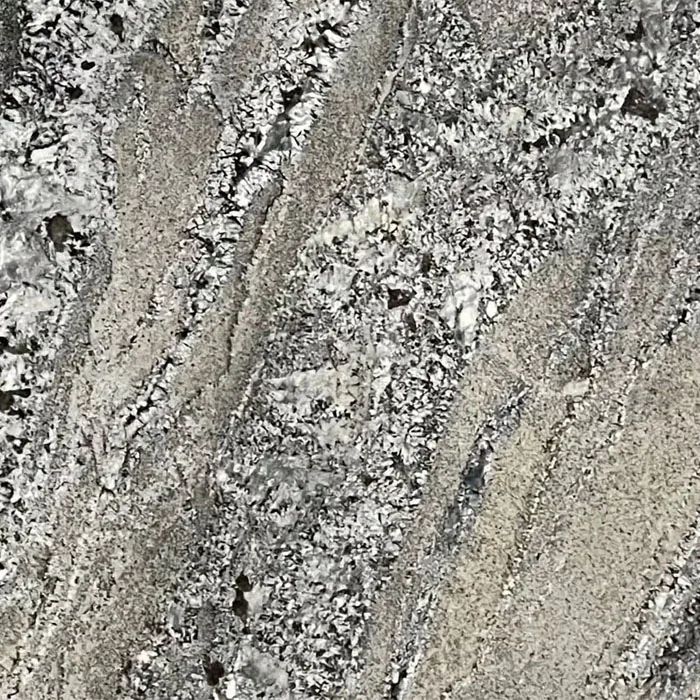
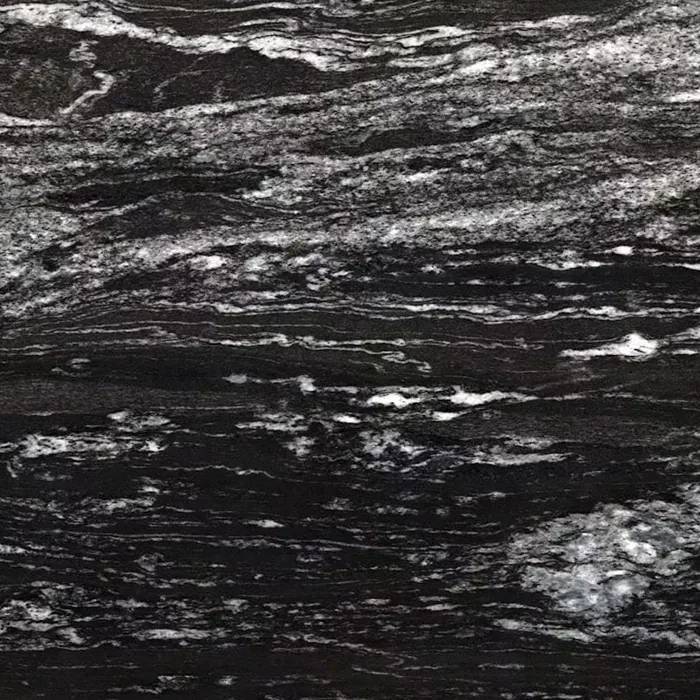
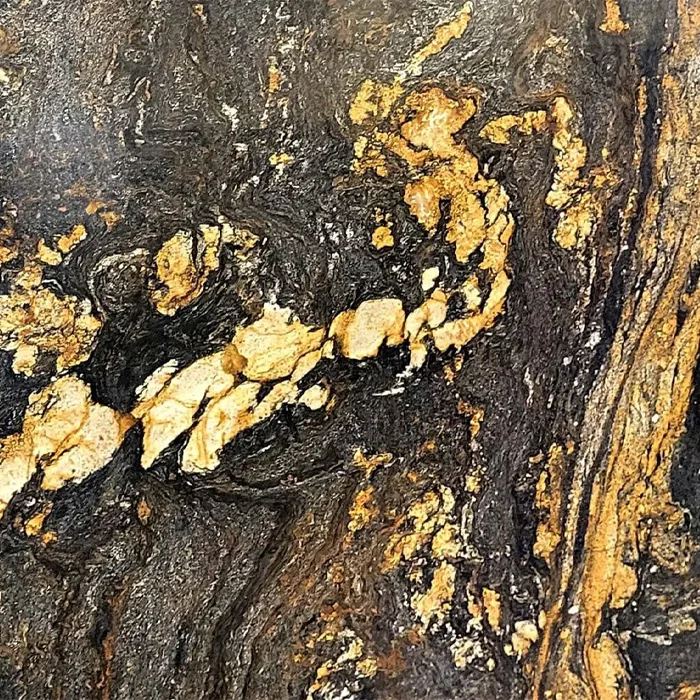
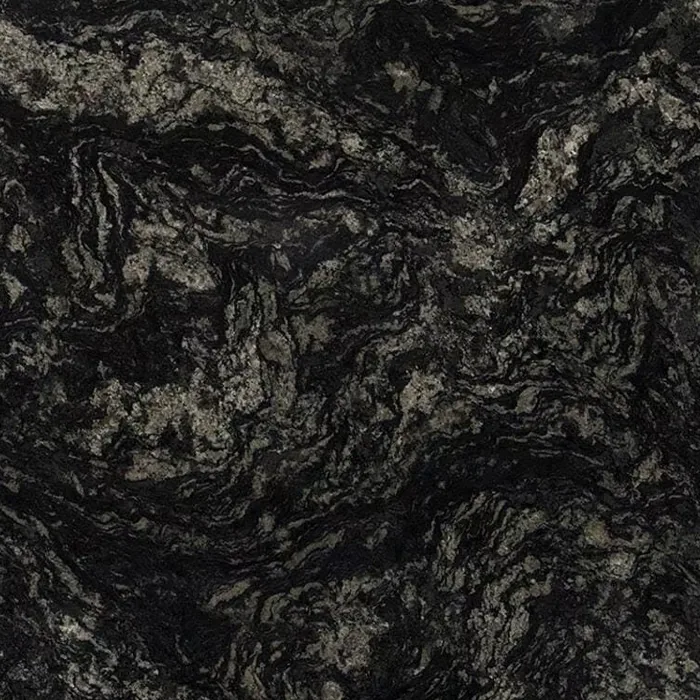
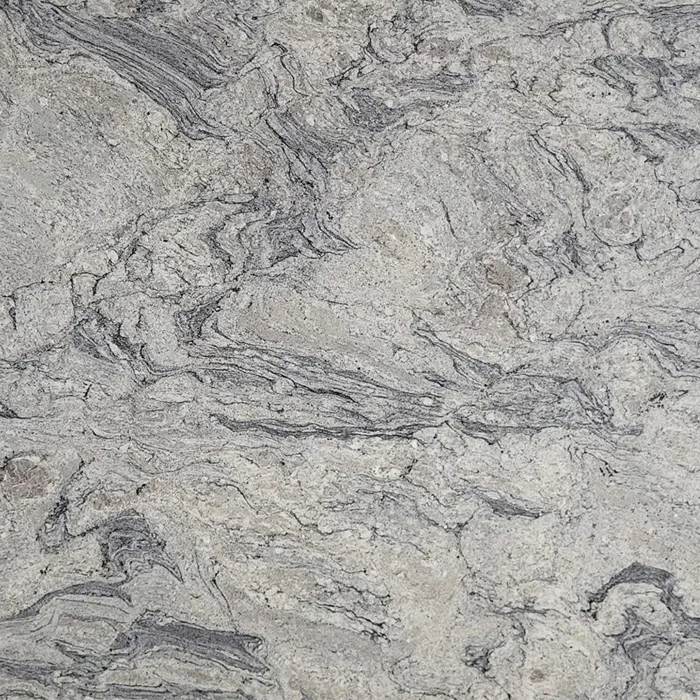
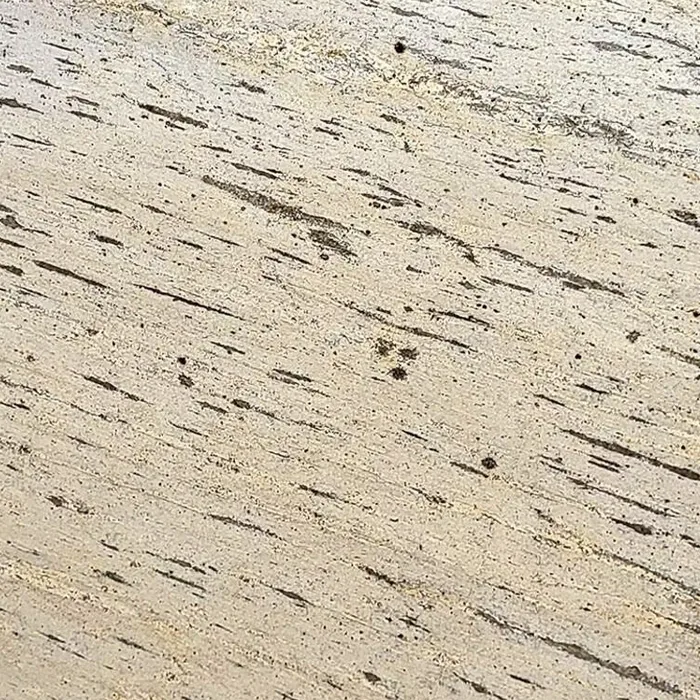
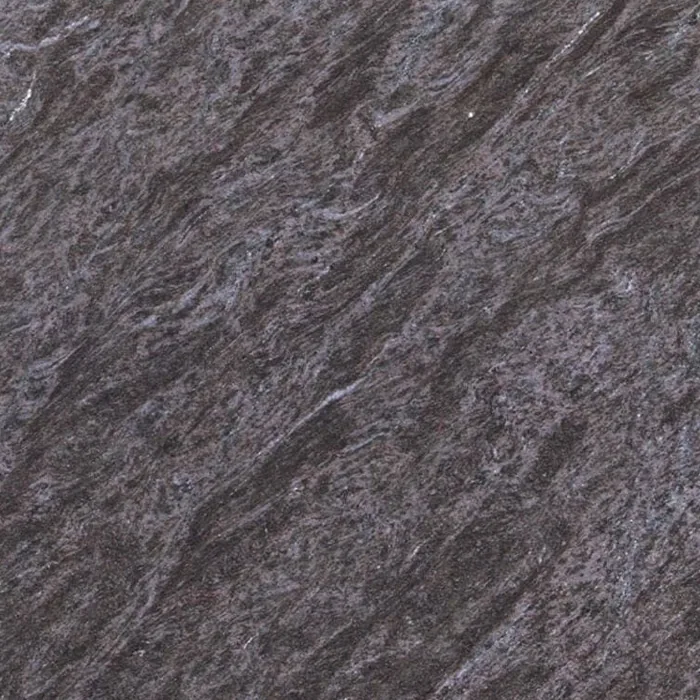
A dozen of them below. Photographs are indicative, and screens and slabs disagree. We cannot post granite offcuts, so treat every image here as a starting point rather than a match.




Jump to a tone
16 of our granite surfaces are not yet colour-tagged, so they will not appear under a tone filter. We would rather leave them untagged than guess the tone from a catalogue photograph. Browse the full 45 to see them.
What it is
Granite is an igneous rock, molten material that cooled slowly deep underground, which is where the visible crystals come from. It is extracted in blocks, sawn into slabs and polished. Nothing is added, nothing is pigmented, nothing is pressed.
That means the slab is a geological object, not a product line. Colour, crystal size and movement vary between blocks from the same quarry, and even between slabs cut from the same block. A sample tells you what the stone is; it does not tell you what your slab looks like. For a large island, seeing the actual slab is worth the trip.
In our catalogue
Every figure above is supply only: the slab, before fabrication, edge profiles, cut-outs, delivery and installation. Those are itemised separately on your written quote so you can see what each choice costs.
How it behaves
The four things that decide whether you are happy with a worktop in five years' time.
Very hard. Most kitchen knives will not mark it, and it takes years of heavy use without visible wear. Corners and the edges of cut-outs can chip if hit hard, and a chip in natural stone is repairable but rarely completely invisible, because the repair has to match a pattern that is unique.
Structurally it is the most forgiving of the three around a hob or a sink, provided the cut-outs are properly radiused, which is a fabrication matter, not a material one.
Excellent. Granite formed under heat and pressure; a pan off the hob does not register. You can put a hot roasting tin down on it without thinking, which for a lot of cooks is the entire argument. The only heat caution is the sealer, not the stone.
This is the trade-off. Granite is porous, to a degree that varies a lot by stone. Some of the dense blacks absorb almost nothing, while lighter, coarser-crystalled slabs will take up oil readily. Unsealed or under-sealed granite will mark from olive oil, red wine and citrus, and an oil mark can take weeks to draw back out.
Sealed on installation, and topped up over the life of the worktop. How often depends on the stone and how hard the kitchen is used, so we tell you what your specific slab needs when we hand it over rather than quoting a generic interval. The test is simple: splash water on it, and if it darkens within a few minutes it wants resealing. It is a ten-minute job with a cloth, but it is a job that has to actually happen.
Granite is sold in slab thicknesses set by the quarry and the processor, and availability differs by stone. A mitred edge can build a deeper profile from a thinner slab, though on a heavily patterned granite the mitre needs care so the pattern turns the corner convincingly. We confirm what is available in your chosen stone before you commit.
Whatever the slab thickness, a mitred edge folds the surface down at 45 degrees so a thinner slab reads as a deep one with the pattern running unbroken round the corner. See the edge profiles.
Serious cooks, anyone who wants a surface that is genuinely one-off, and kitchens where hot pans land wherever there is space.
If that does not sound like your kitchen, say so when you send us the plans. We fit all three families and we are not paid more for one than another, so the advice you get back is the advice we would give a friend.
The honest part
Three things a showroom will not lead with. If any of them describes your kitchen, tell us and we will point you elsewhere.
Sealing is not a one-off. If the idea of checking your worktop with a splash of water once in a while irritates you, granite is the wrong material and we would rather say so than sell it to you.
Natural variation is the point of granite, but it catches people out. If you need the finished kitchen to match a photograph, or you are matching an island to an existing run, engineered stone is the safer choice.
Heavily veined granites can look dramatic in a slab yard and busy in a 3-metre run. Where possible, see the slab and think about how much of it will actually be visible once cabinets, appliances and a splashback are in.
Worth reading
The questions people actually ring us about, answered properly rather than in a specification table.
The three materials compared on the things that genuinely differ in a working kitchen (heat, stains, scratches, joins and cost) rather than on brochure adjectives.
Read the guideHow to tell whether your granite actually needs resealing, why the annual rule everyone repeats is wrong, and how to apply a sealer without leaving a haze you then have to fix.
Read the guideStains and etches look alike and need opposite treatments. How to tell them apart, what to do in the first minute, the poultice method properly explained, and what will make it permanently worse.
Read the guideYou can, and the worktop will usually be fine. Your knives will not be. What actually scratches each of the three materials, why most marks are not scratches at all, and why heat is the real risk.
Read the guidePale surfaces show tea and turmeric. Dark ones show every water spot. Mid greys hide almost everything. An honest account of how the four colour families behave once they are in a working kitchen, and how to judge one before you commit.
Read the guideBy borough
The stone does not change, but the kitchens do. These pages take granite through what each borough's housing stock actually is, the carry, the walls, and what moves the price there.
Quartz is the default for a busy family kitchen: it is engineered, non-porous, needs no sealing and looks the same slab to slab, so a big run stays consistent. Granite is quarried natural stone: every slab is different, heat off the hob is a non-issue, and it needs sealing periodically. Sintered surfaces like Dekton are the most durable of the three: highly scratch and heat resistant, and thin enough to take a fine mitred edge. Tell us how the kitchen gets used and we will narrow it to two. Free samples are posted on the quartz range; granite and sintered surfaces we cannot send out, so those are judged from the slab.
Quartz and sintered surfaces like Dekton are non-porous and never need sealing. Granite is natural stone and does need sealing periodically. How often depends on the stone and how hard the kitchen is worked. We tell you which camp your surface is in and how to test it, and it takes about twenty minutes to do.
For quartz, close enough to rely on, and that is the range we can post. Quartz is manufactured to a consistent pattern, so a sample represents the slab well. Look at it in your own kitchen, in daylight and again under your downlights, because showroom lighting flatters everything. We cannot send granite or sintered samples. That matters less for granite than it sounds, because granite is quarried and veining, movement and background tone vary between slabs and between batches, so a small offcut would indicate character rather than match a slab in any case.
Ring us and send a photo. Chips in quartz and granite can very often be filled and polished so they are hard to find, and a cracked section can sometimes be replaced without touching the rest of the kitchen. Impact damage is not covered by either guarantee, but we would rather repair it properly than have you live with it. You will get a straight answer on whether it is worth doing.
Every one of these is on our Google profile under the reviewer’s own name. Nothing here is written by us, and the link goes straight to the source.
“Karem did a fantastic job at installing my antique bronze mirror for my coffee/drinks unit. He was really professional and his communication throughout was clear.”
“We have a new kitchen. Our builder recommended Worktop Worx for our worktop. Now we have an amazing worktop very good price too. Really recommend. They were really good to us. 10/10”
“We recently had the Arctic Starburst worktop installed by Worktop WorX and it looks amazing. The subtle sparkle really catches the light and gives the kitchen a clean, modern feel. The Arctic Starburst surface feels high quality, durable, and is easy to keep clean. The finish and installation from Worktop WorX were spot on. Really happy with the result and would definitely recommend both Arctic Starburst and Worktop WorX to anyone upgrading their kitchen.”
“I am really happy with the work! He fitted my kitchen granite worktop really nicely and got the job done on time, just as promised. He was friendly, professional, and made sure everything was done the way I wanted. Would definitely recommend Karam to anyone looking for a great job!”
“We recently had our kitchen worktops supplied and fitted by Worktop WorX using Laurent Gold sintered stone, and we couldn’t be happier with the result. The finish, quality, and attention to detail were outstanding from start to finish. Karem was incredibly helpful throughout the whole process professional, knowledgeable, and always available to answer…”
“I used Karem’s services 5 years ago for purchasing and fitting the quartz worktop in my then brand new kitchen. The price was reasonable and the service reliable and spot on, no delays in fitting, misunderstanding or excuses. I recommended him to a friend, who also used his services and they were happy too! If I need to order new kitchen work top again,…”
“Absolutely delighted with our new worktop from Worktop WorX. The Capri White finish looks incredible, clean, modern, and really brightens up the whole kitchen while pairing beautifully with the darker cabinetry. The quality of the worktop is outstanding, with a flawless finish and seamless installation that really shows the attention to detail. It’s not…”
“Kareem did the countertops dur8ng my kitchen remodel, and I was so impressed that I had him back to do the laundry room as well, which tells you everything you need to know. He is an absolute gem. Shows up when he says he will (which, let’s be honest, is rarer than it should be), does beautifully work, and clearly takes real pride in what he does. The…”
“We recently had a Calacatta Gold worktop installed by Worktop Worx and are really pleased with the result. It has completely transformed our kitchen, much brighter, modern, and high-end compared to our old wooden surface. The team were professional, efficient, and the finish is excellent with great attention to detail. The worktop looks amazing and is…”
“Excellent service from start to finish. The team at Worktop Worx were professional, friendly, and really paid attention to detail. They listened to what I wanted, gave helpful advice, and delivered a high-quality finish. The worktop looks amazing and has completely transformed the space. Everything was completed on time and left clean and tidy. Highly…”
“We installed new kitchen and got the worktop and splash back from them. Their professional work and commitment was wonderful. Quality of work compared to price was way too good. Thank you guys.”
“Professional, polite and friendly service. Very pleased with finished product.”
“Great experience from this company, I am happy with the materials, fitting and the team.”
“Perfect service,the best on this job”
“I am really happy with my worktop. It is beautiful and the service provided was second to none. I totally recommend.”
“Nice work from worktop worx. Highly recommended”
“I recently had my kitchen worktop and splashback done by Karem from Worktop WorX and i am very pleased with the result. From the initial consultation and measurements to the final installation, the whole process was smooth and professional. The attention for details and the quality made the difference and everything was finished to a high standard. I…”
“Lovely team, business and quality motivated, prompt delivery with installation. Affordable prices. Wide range of worktops available. High recommendation”
“Karem did an excellent job on my kitchen. He was professional, reliable, and paid great attention to detail. The finish looks amazing and has completely transformed my kitchen. Thank you! Would highly recommend his work!”
“Excellent service and top quality workmanship. The worktop looks absolutely amazing and the attention to detail is impressive. The team was professional, punctual, and very easy to work with. Highly recommended for anyone looking for a premium kitchen worktop! 👌”
“Really impressed with the quality and finish of these worktops. Great range of materials, precise fabrication, and smooth communication throughout. The whole process was easy and the final result looks fantastic. Highly recommend!”
“Karim is excellent, he did superb job with Templeting and fitting my kitchen, highly recommend”
“We had a fantastic experience with Worktop WorX from start to finish. The team was professional, friendly, and delivered excellent workmanship. We chose the beautiful Capri White worktop, and it has completely transformed our kitchen with its elegant, high-end look.”
“Great service. Super quick and easy communication. I love my new worktop 🥹🥹”
“Great work, super helpful team. I'd definitely recommend!”
“Excellent work and highly recommend. Very professional and did an outstanding job with my worktop. Karem responded very quickly and swiftly, top guy!”
Plans, a sketch or photos with rough measurements is enough for an indicative range. After templating you get a fixed written quote with every cut-out and edge itemised, and installation 5–10 working days from template.
Not sure this is the right material? Tell us how the kitchen gets used and where the light falls. If granite is wrong for it, we will say so before you have spent anything.
+44 7830 847489 · 5.0 from 26 Google reviews