
Guides
The things worth knowing before you order stone
Written from what actually comes up on site, not a brochure. If a guide tells you a cheaper material does the same job, that is deliberate.
01 / 04
Before you buy
 Before you buy5 min read
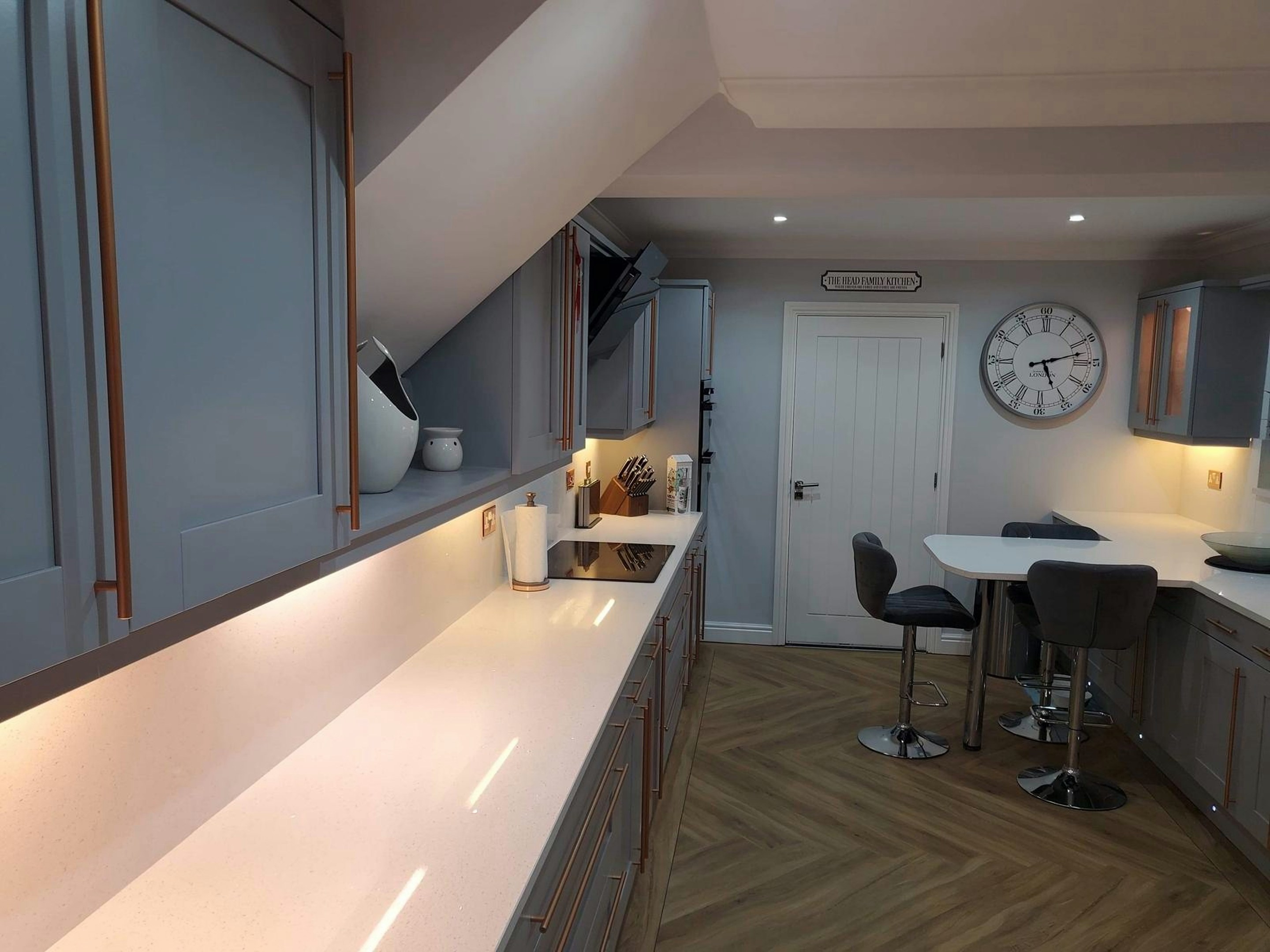
How to measure your kitchen for a worktop quote
A tape measure, ten minutes and a sheet of paper is enough to start a proper written quote. Here is exactly what to record and what to photograph.Read the guide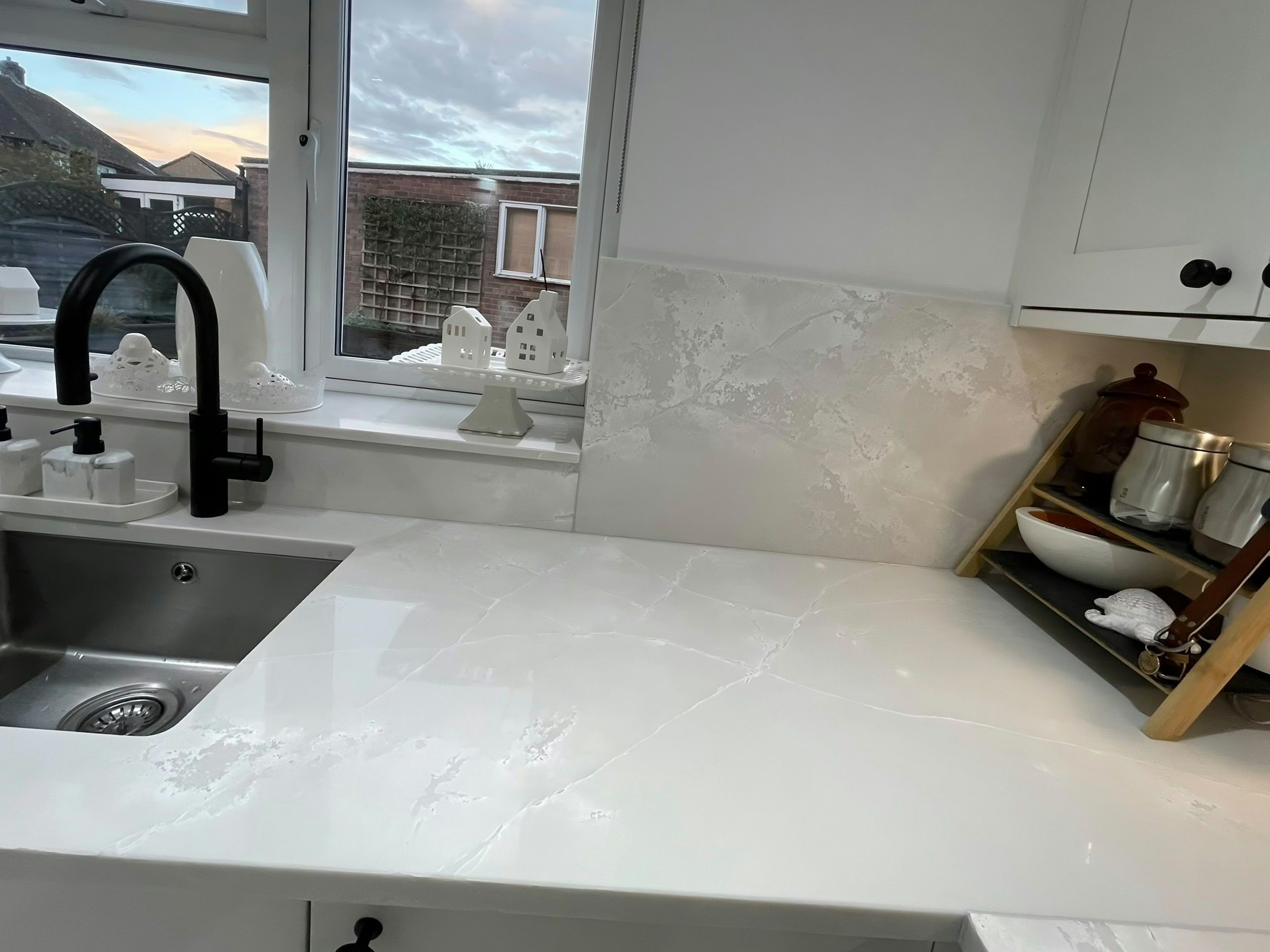 Before you buy11 min read
Where the joins in a stone worktop go, and how much you will see them
Why joins exist, what decides how many you get, where a good one belongs, and the honest truth about how visible a join is in quartz, granite and sintered stone.Read the guide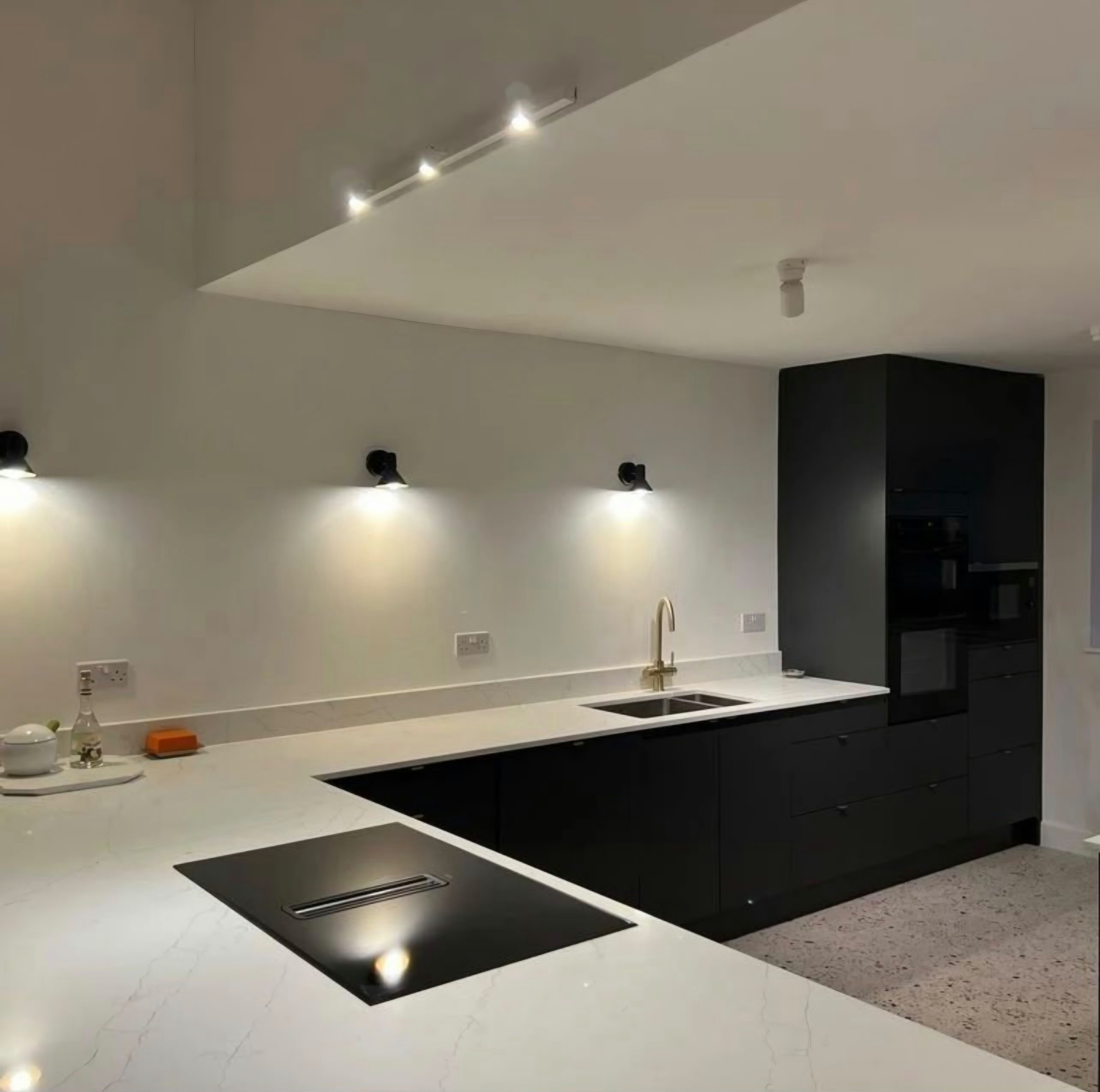 Before you buy11 min read
How long does a stone worktop take, from enquiry to fitted?
The stone is rarely the slow part. Here is the real sequence, the one dependency that sets your finish date, and how to plan backwards from a weekend you care about.Read the guide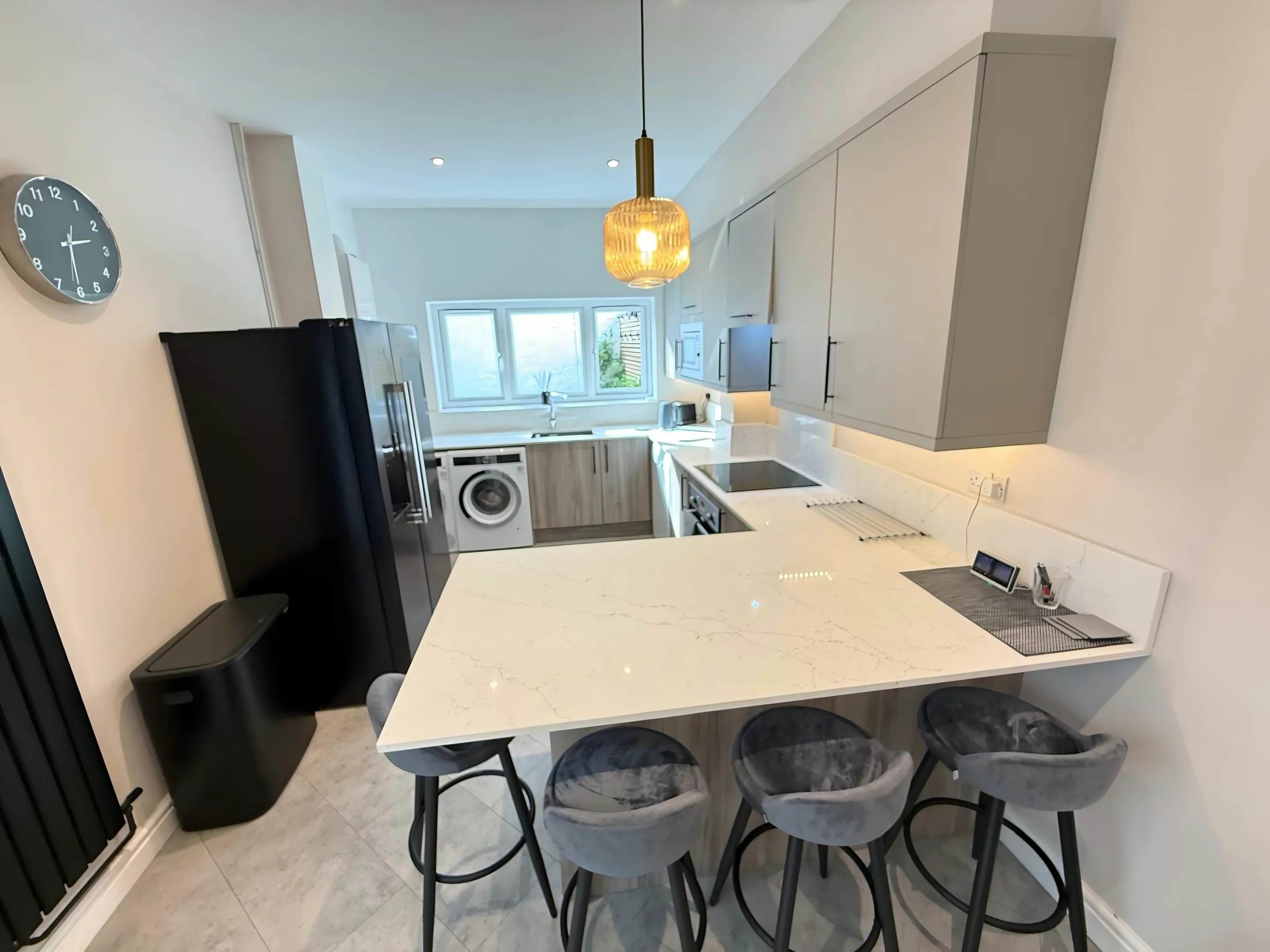 Before you buy11 min read
Breakfast bar overhangs: how far can stone go, and does it need supporting?
How overhangs actually work, why knee room is measured from the cabinet rather than the stone, what decides a safe unsupported span, and the support options ranked by what each costs you visually.Read the guide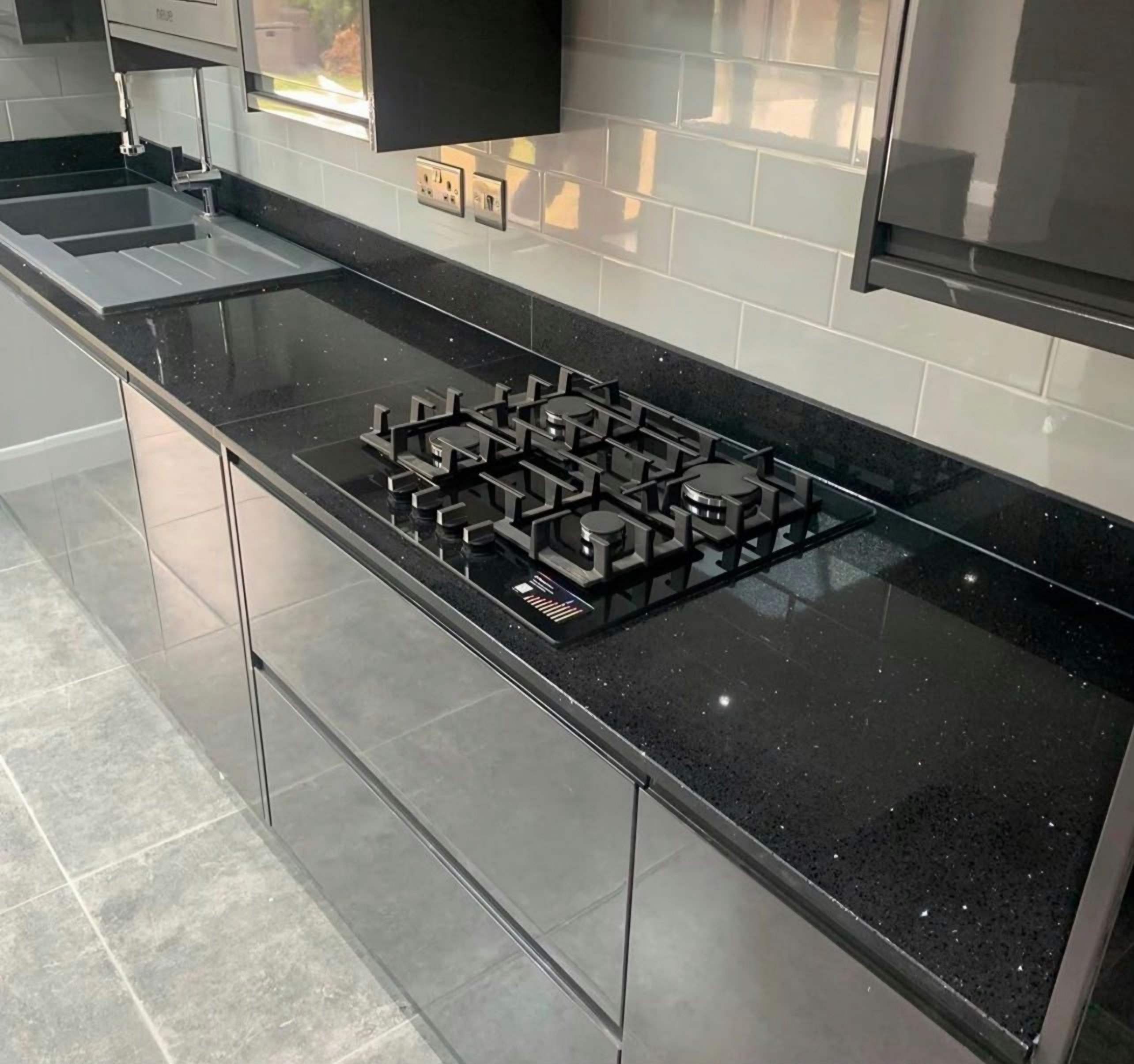 Before you buy10 min read
Replacing a worktop without replacing the kitchen
Usually yes, and it is the best value change you can make to a tired kitchen. But it depends entirely on the units underneath, and here is how to check yours before you ring anybody.Read the guide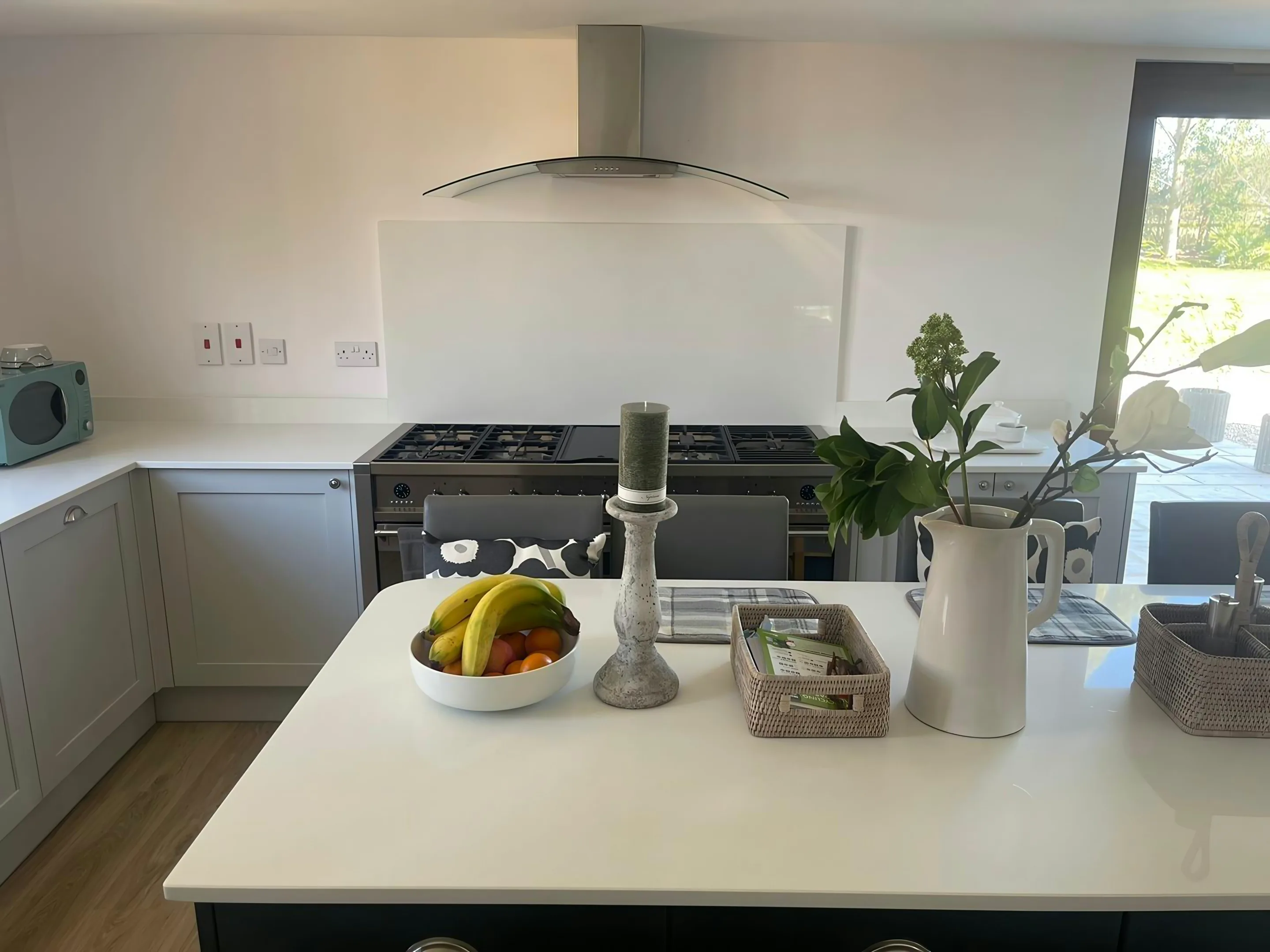 Before you buy10 min read
Kitchen island worktops: what decides the price, the pattern and the piece
Why an island is a slab-yield question before it is a design one, how book-matching and waterfall ends are won or lost at slab selection, and what has to be decided before the cabinetry is fixed.Read the guide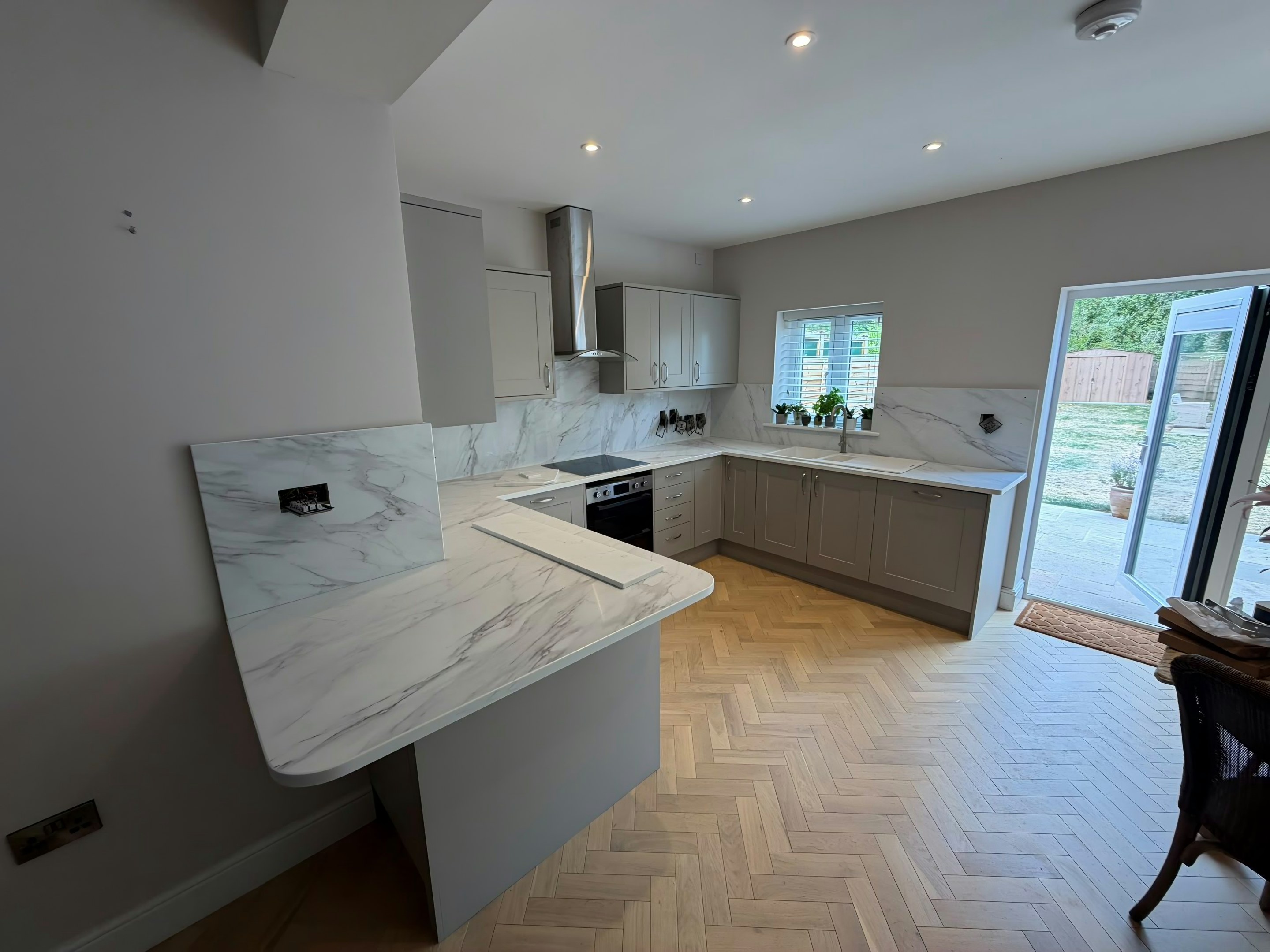 Before you buy10 min read
Stone worktops for a small kitchen: what actually changes, and what does not
A small kitchen does not cost proportionally less than a big one, and knowing why is the difference between a good decision and a disappointing quote. Where the money really goes in a compact room, where you genuinely save, and what to prioritise.Read the guide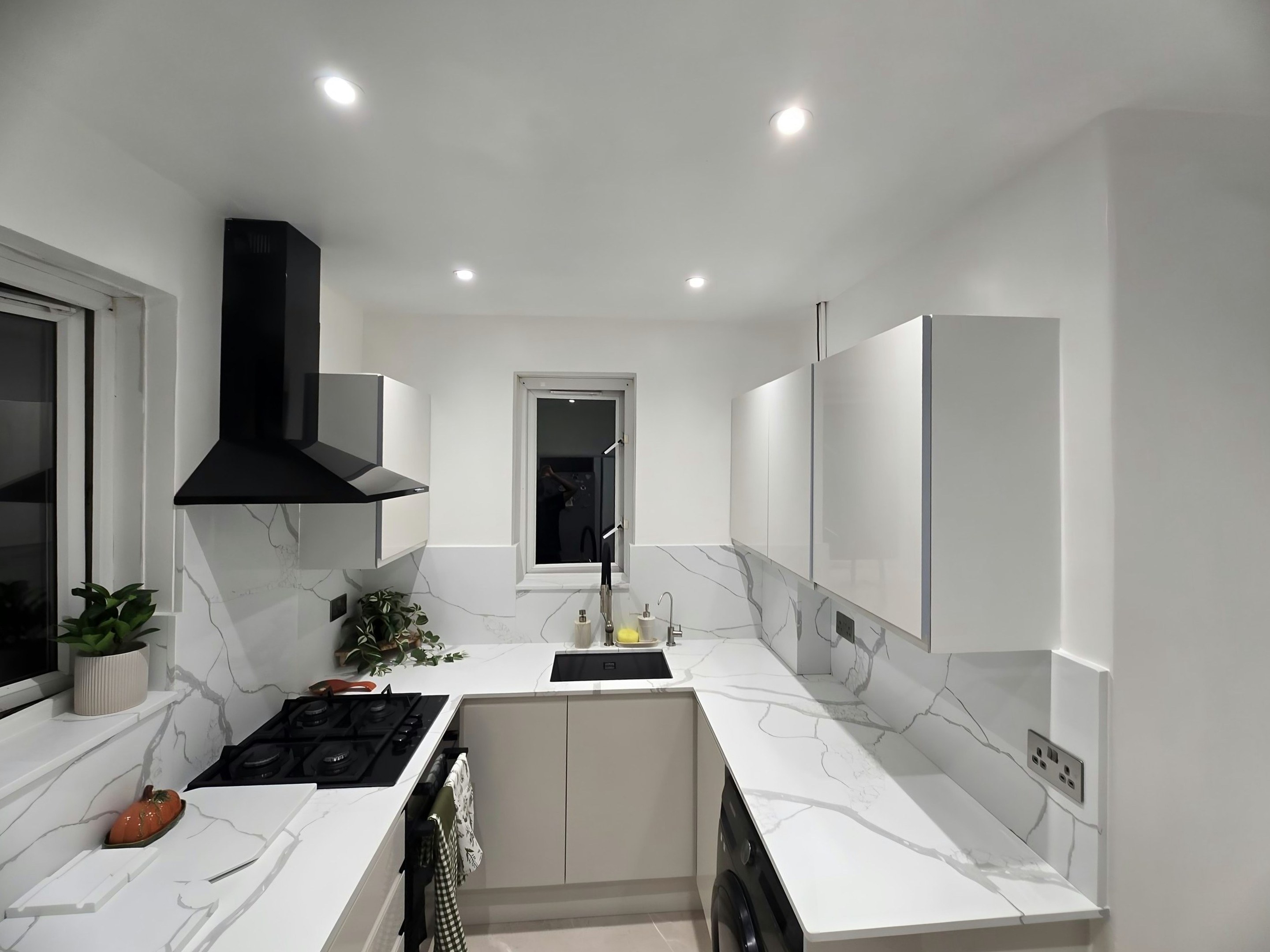 Before you buy9 min read
Going from laminate to stone: what actually changes
The same kitchen, the same units, a completely different object on top of them. What changes when you swap laminate for stone (weight, templating, joins, edges, the sink), and the one check that decides whether you can.Read the guide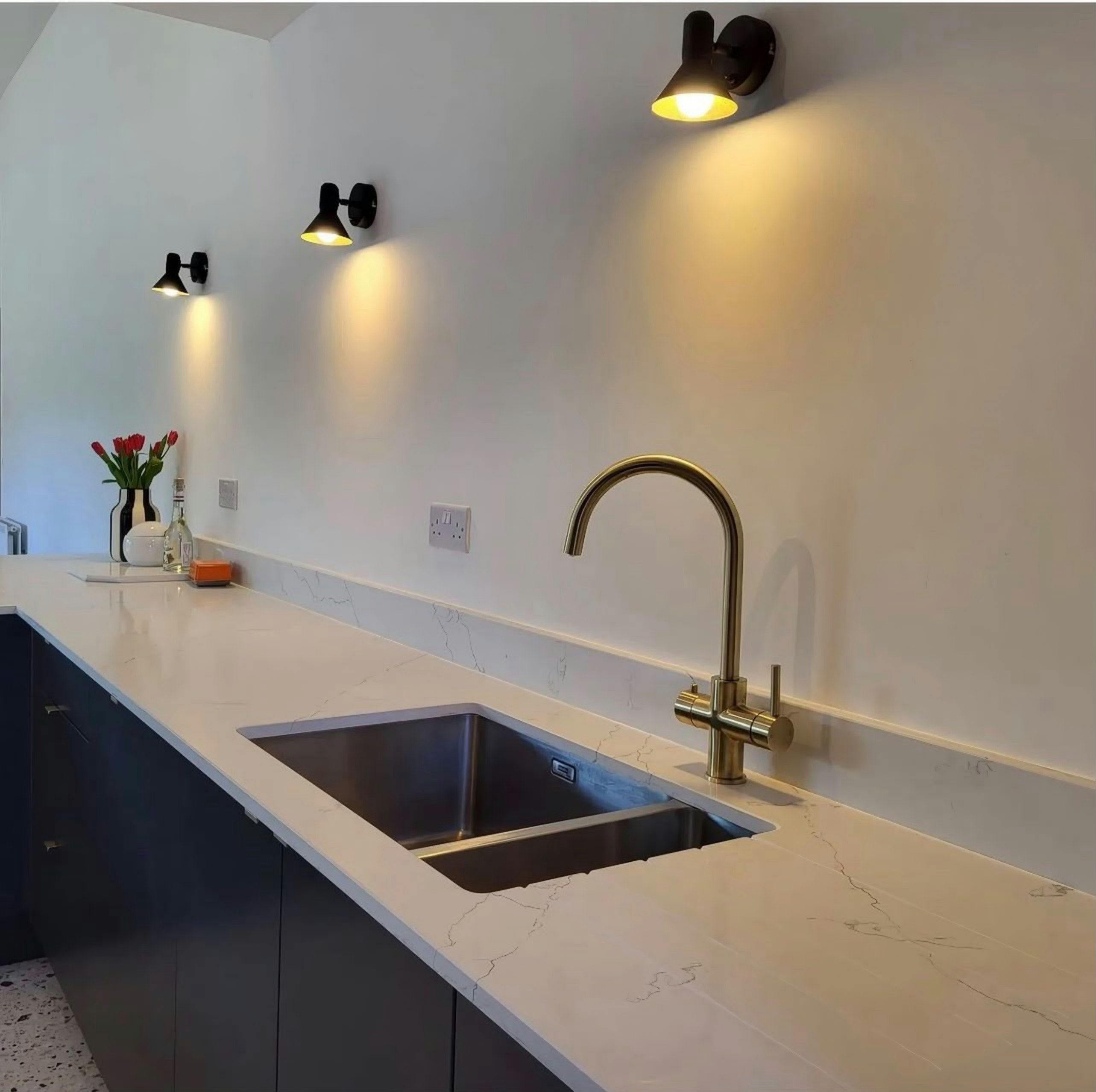 Before you buy8 min read
Kitchen worktop sizes: standard height, depth, thickness and length
In most UK kitchens the worktop surface sits around 900mm from the floor and finishes 600mm to 650mm deep on standard 600mm base units. Stone tops are usually 20mm or 30mm thick, and the longest single piece is capped by the slab rather than by a standard length.Read the guide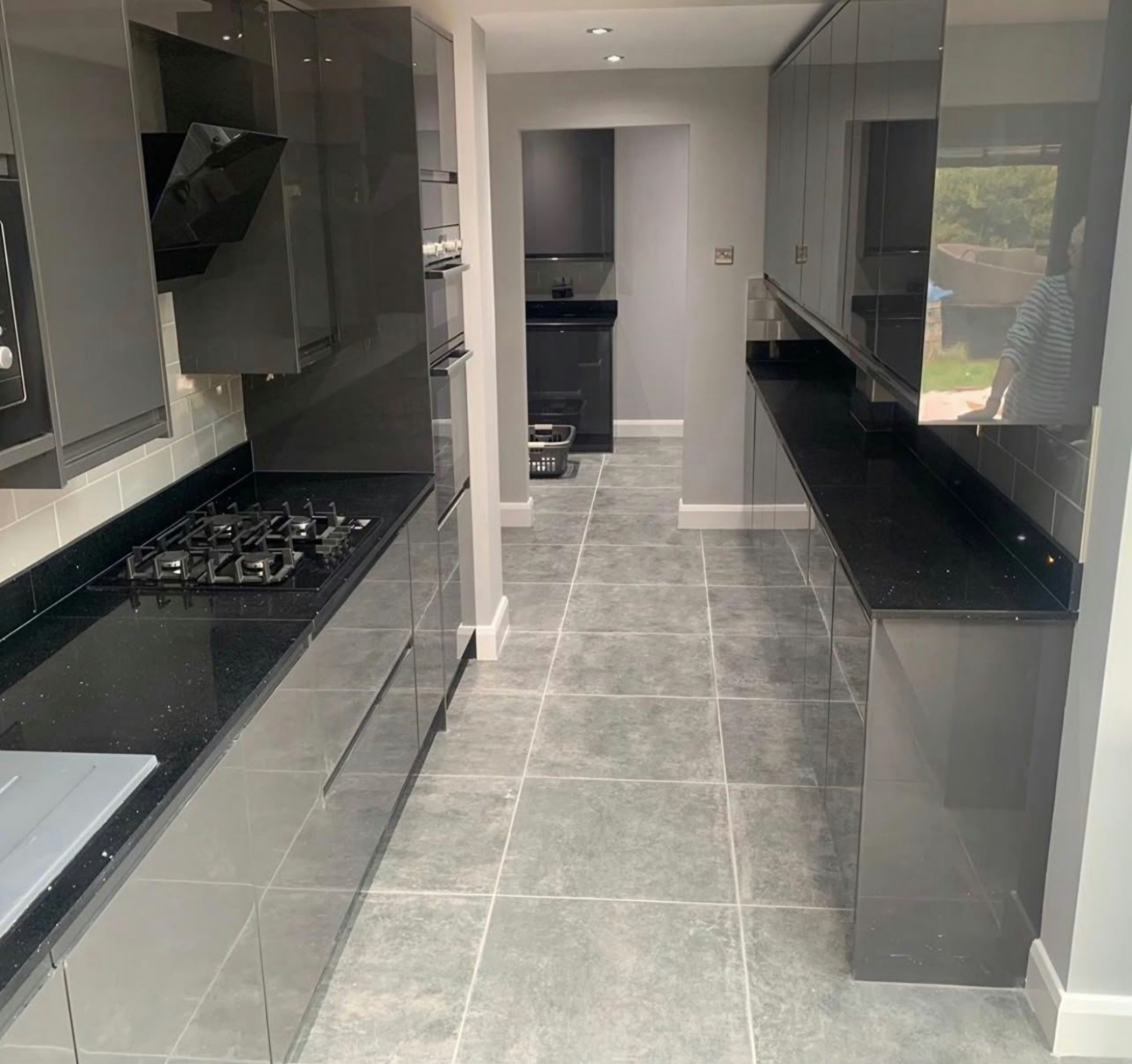 Before you buy7 min read
Choosing a stone vanity top: the stone, the basin and the thickness
A stone vanity top is cut from the same slabs as a kitchen worktop, in a narrower width, and quartz is the easy choice for a bathroom because it never needs sealing. The top is cut for the basin and tap you bought, and a plumber connects them afterwards.Read the guide02 / 04
Choosing a surface
 Choosing a surface5 min read
Which worktop edge to choose for your kitchen
The edge is the part of the worktop you touch every day and the detail that dates a kitchen fastest. What the common profiles are, what each costs you in labour, and how to pick.Read the guide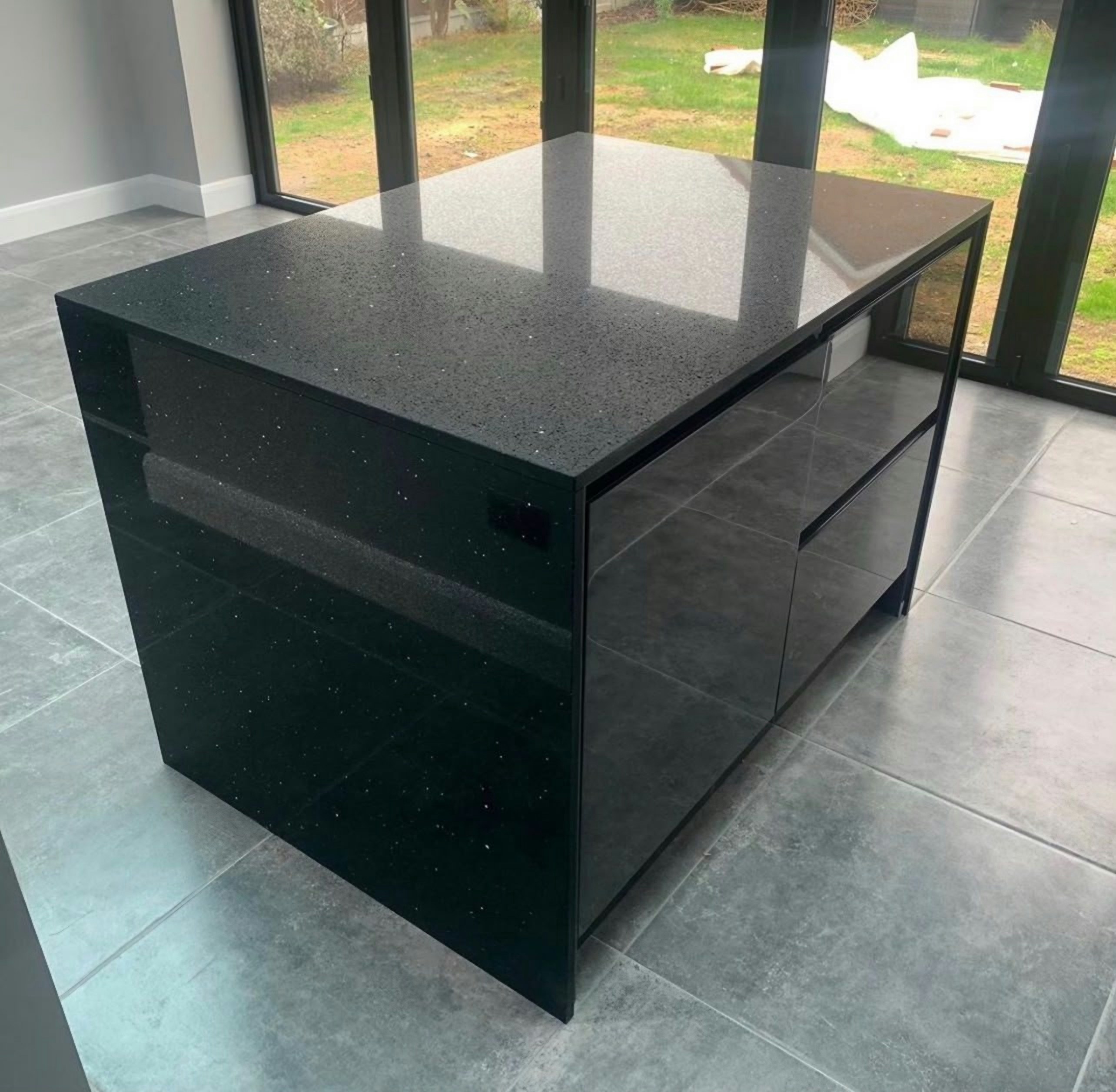 Choosing a surface9 min read
Worktop thickness: 20mm or 30mm?
What the two standard thicknesses actually change, what they do not (strength, mostly), and why the honest deciding factors are weight, the carry into your kitchen and how you want the edge to read.Read the guide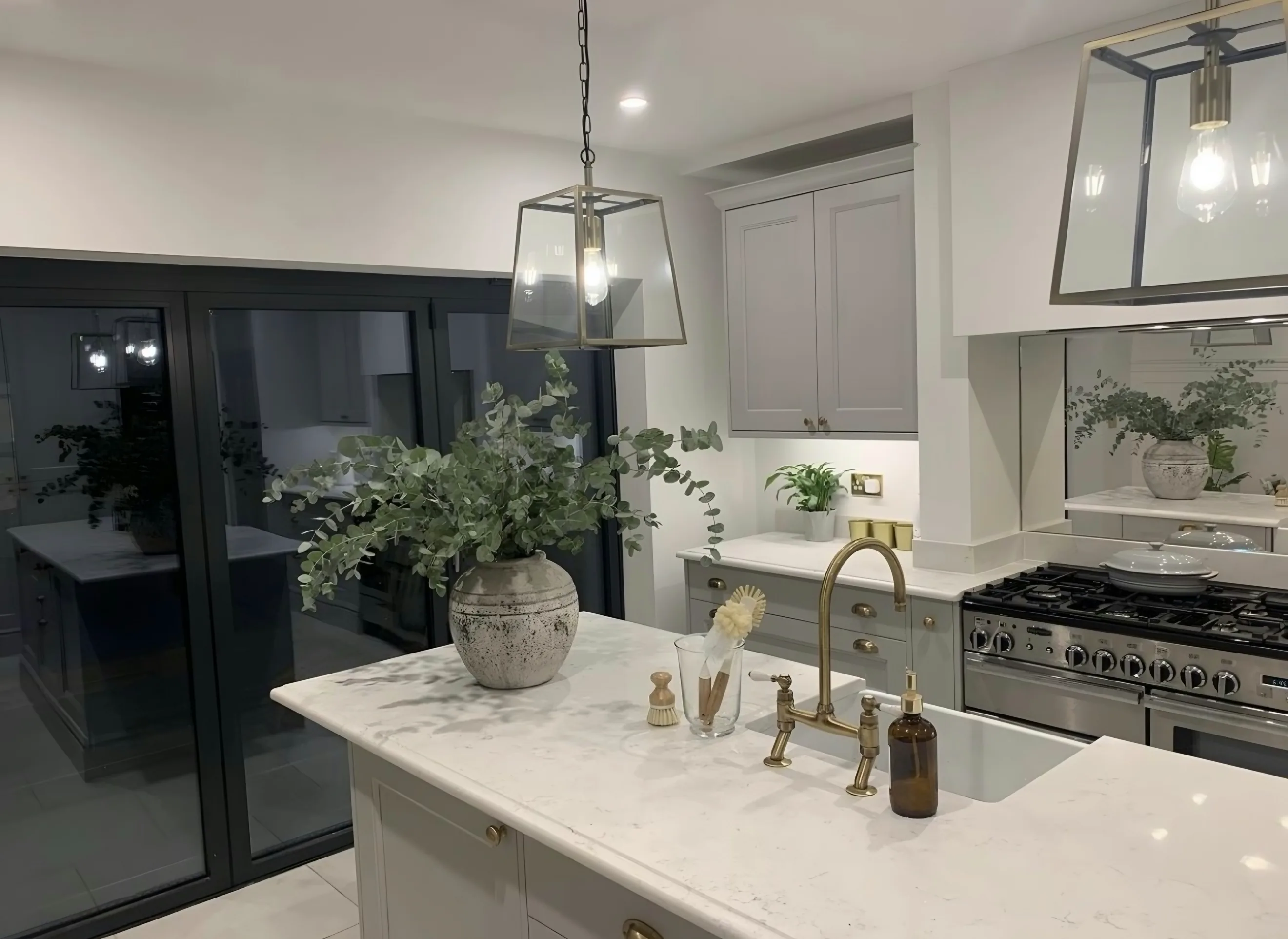 Choosing a surface10 min read
Undermount vs inset vs Belfast: choosing a sink for a stone worktop
What each sink type does to the worktop it sits in: how the cut-out is cut and finished, what it costs in fabrication, what carries the weight, and why the sink has to be in your kitchen before anyone can template.Read the guide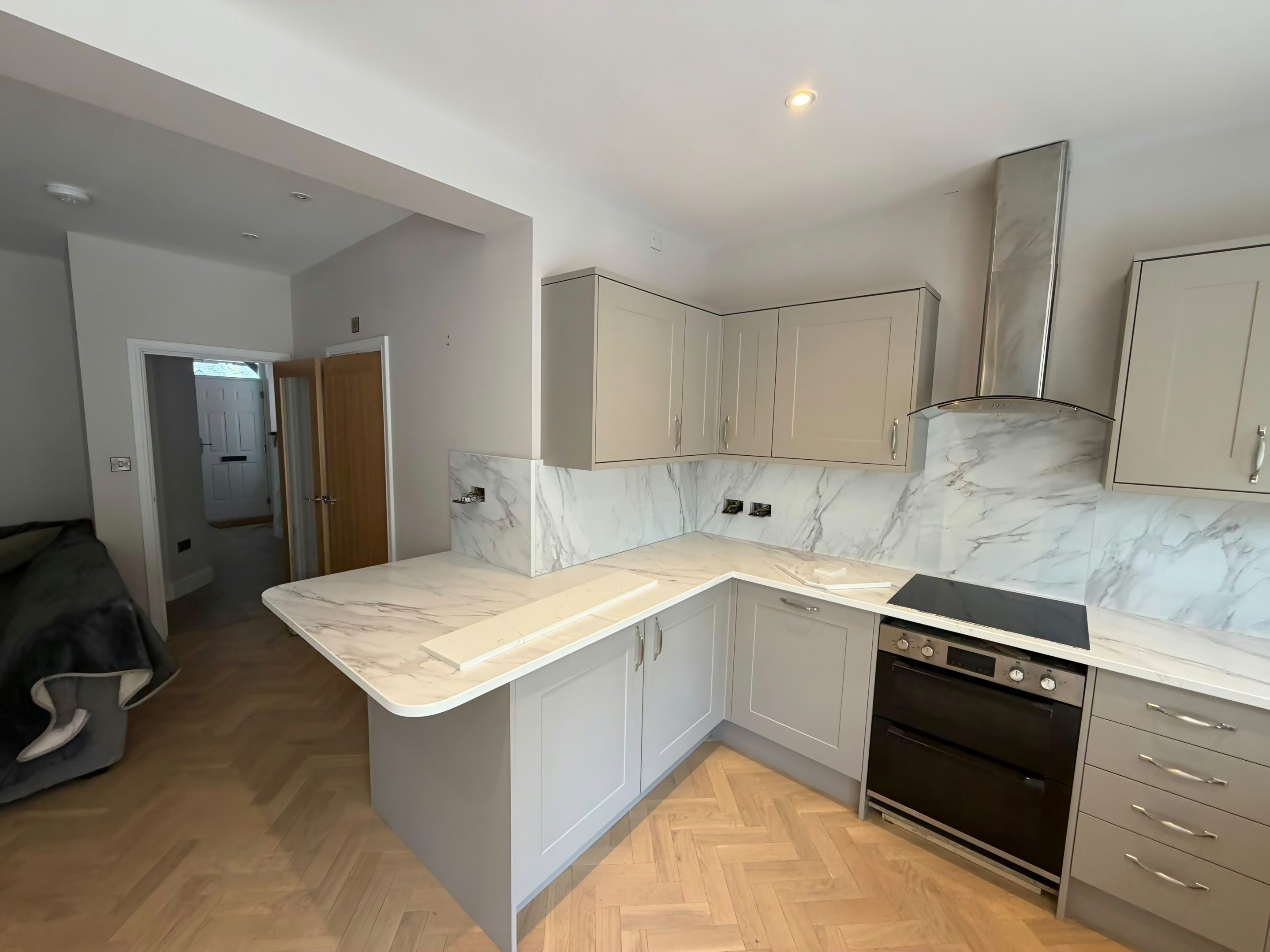 Choosing a surface10 min read
Quartz vs marble: should you have the real thing or the look?
Marble etches, and etching is not a stain. What that actually means in a working kitchen, what a marble-effect quartz genuinely replicates, and how to tell a good one from a printed one.Read the guide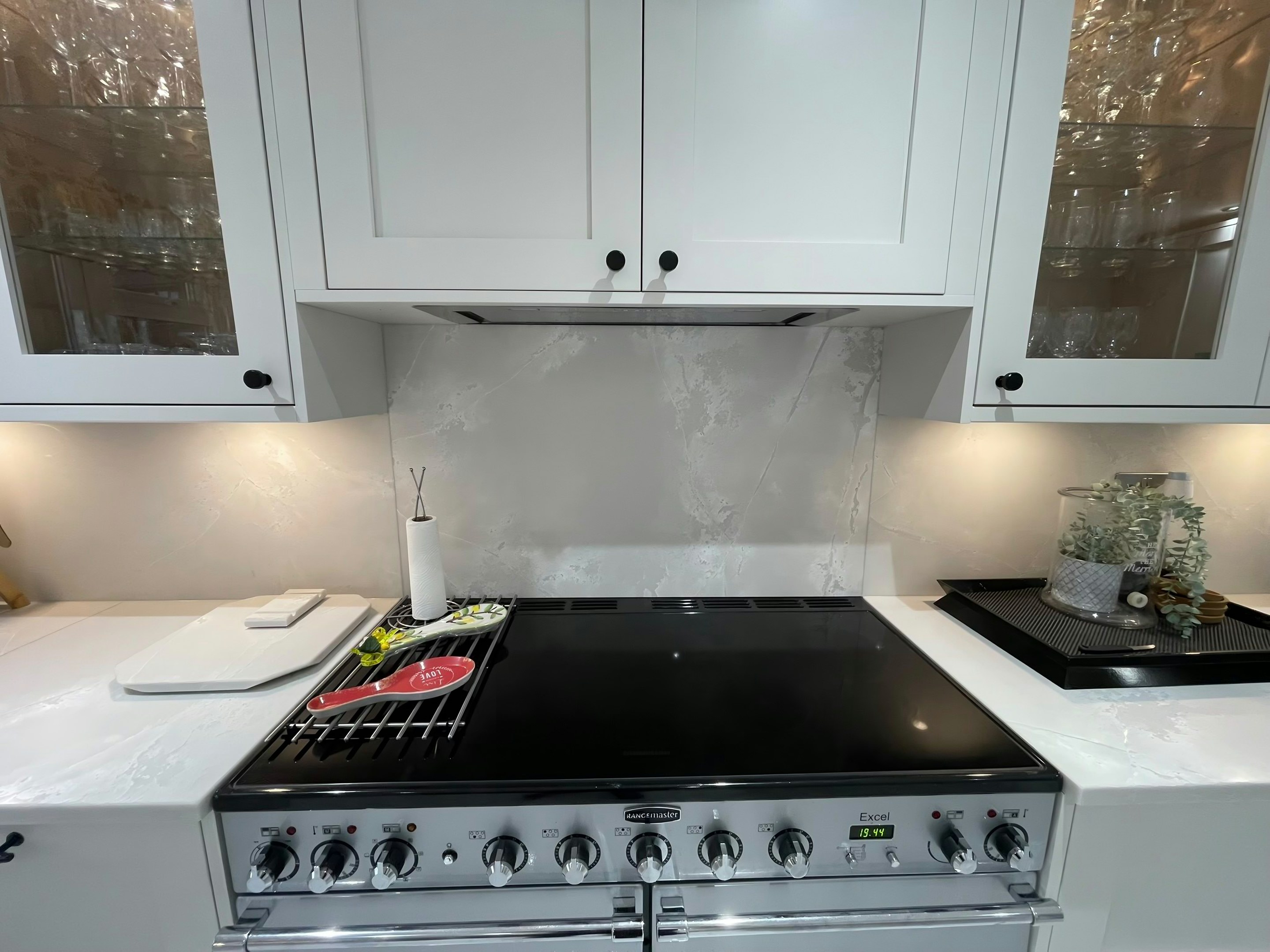 Choosing a surface10 min read
Splashbacks, upstands or tiles: what should go on the wall
A slim stone upstand, a full-height stone splashback or tiles. What genuinely differs between them, why the grout line is the real reason people move to stone, and where tiling is still the better answer.Read the guide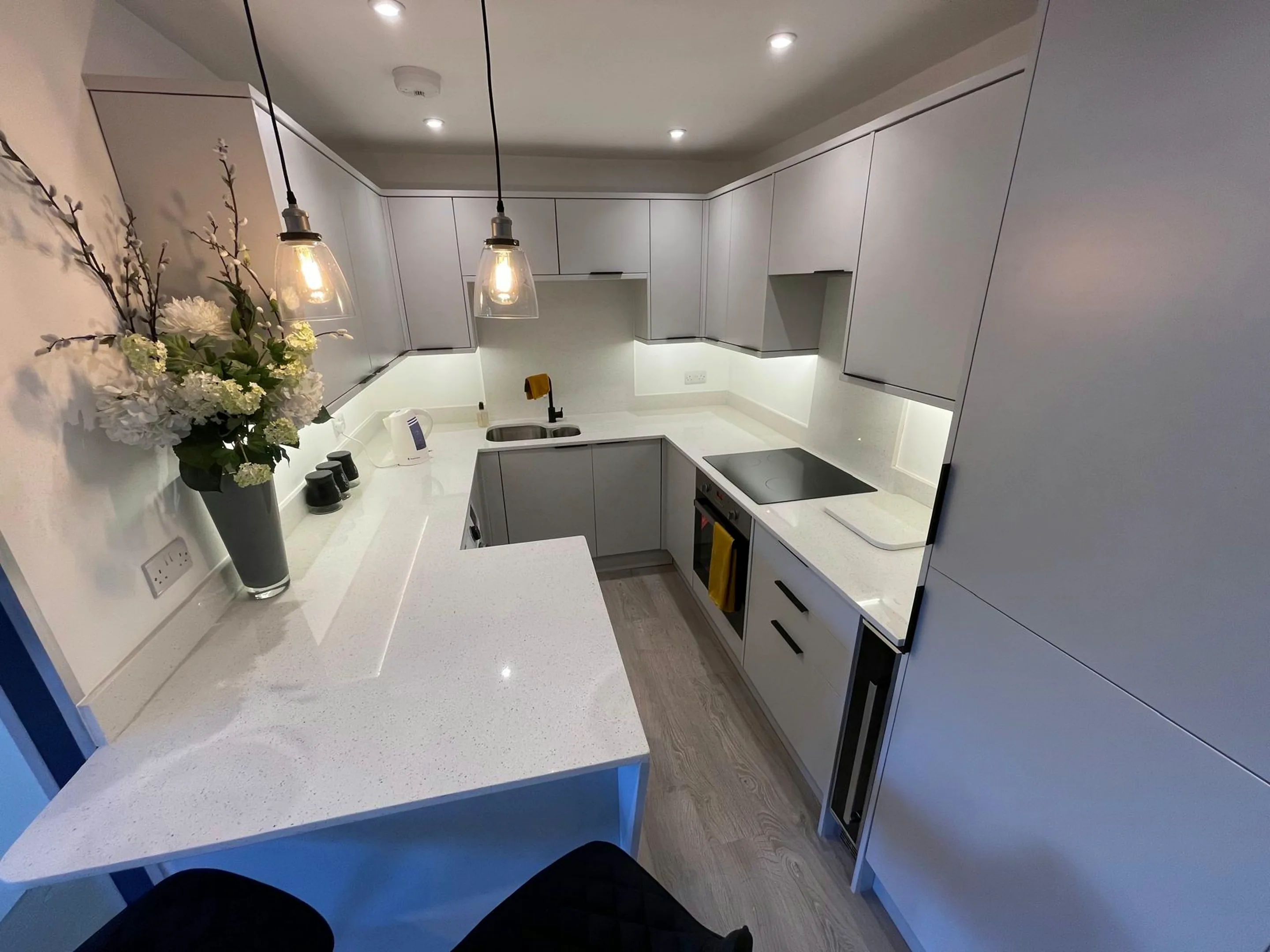 Choosing a surface9 min read
Choosing a worktop colour: what each one hides, and what it shows
Pale surfaces show tea and turmeric. Dark ones show every water spot. Mid greys hide almost everything. An honest account of how the four colour families behave once they are in a working kitchen, and how to judge one before you commit.Read the guide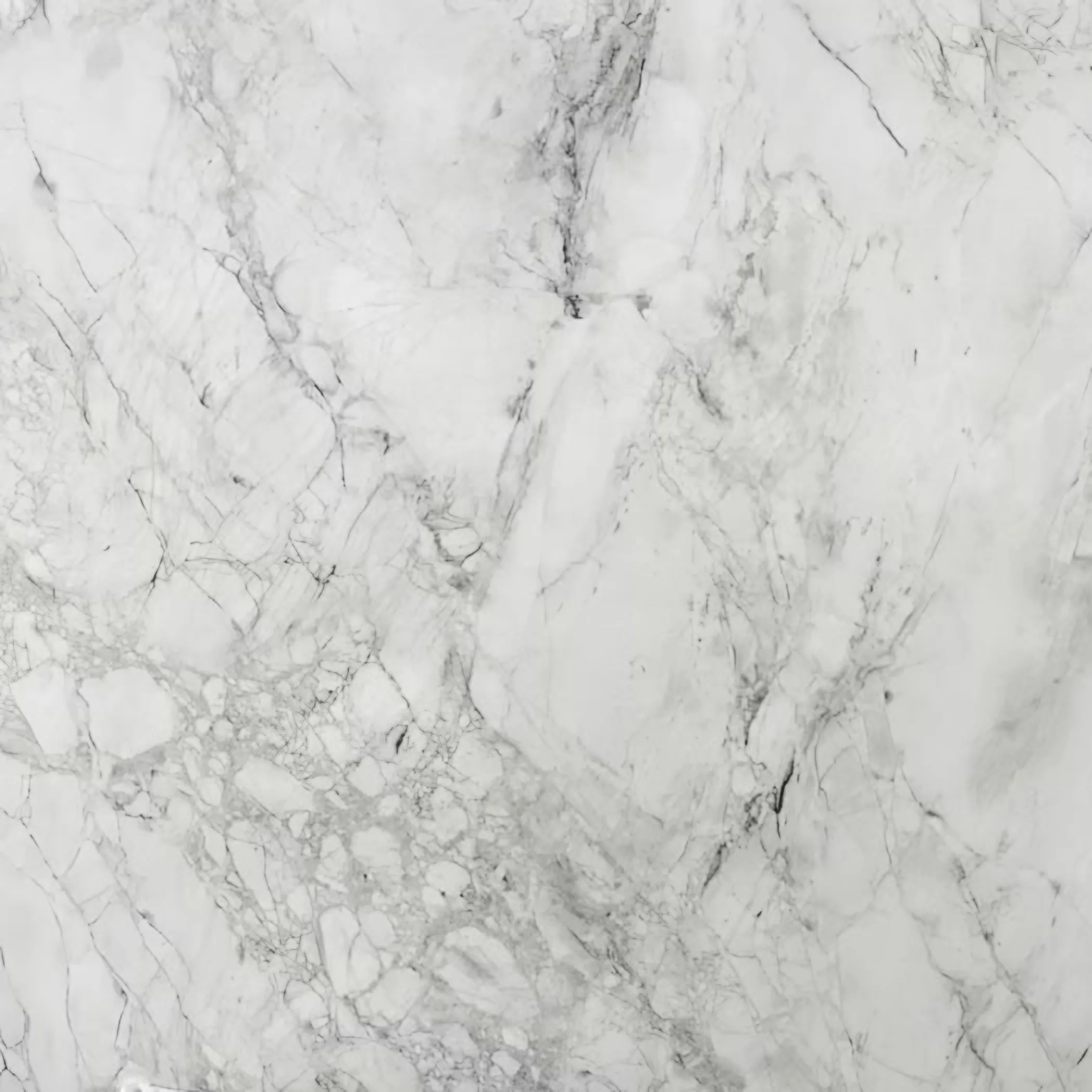 Choosing a surface10 min read
What Is Sintered Stone? Dekton & Porcelain Explained
Sintered stone is a worktop slab made by pressing mineral powders under very high pressure and firing them until they fuse into one dense body, with no resin binding it. That is why nothing in it can scorch, it never needs sealing and it can be made thin.Read the guide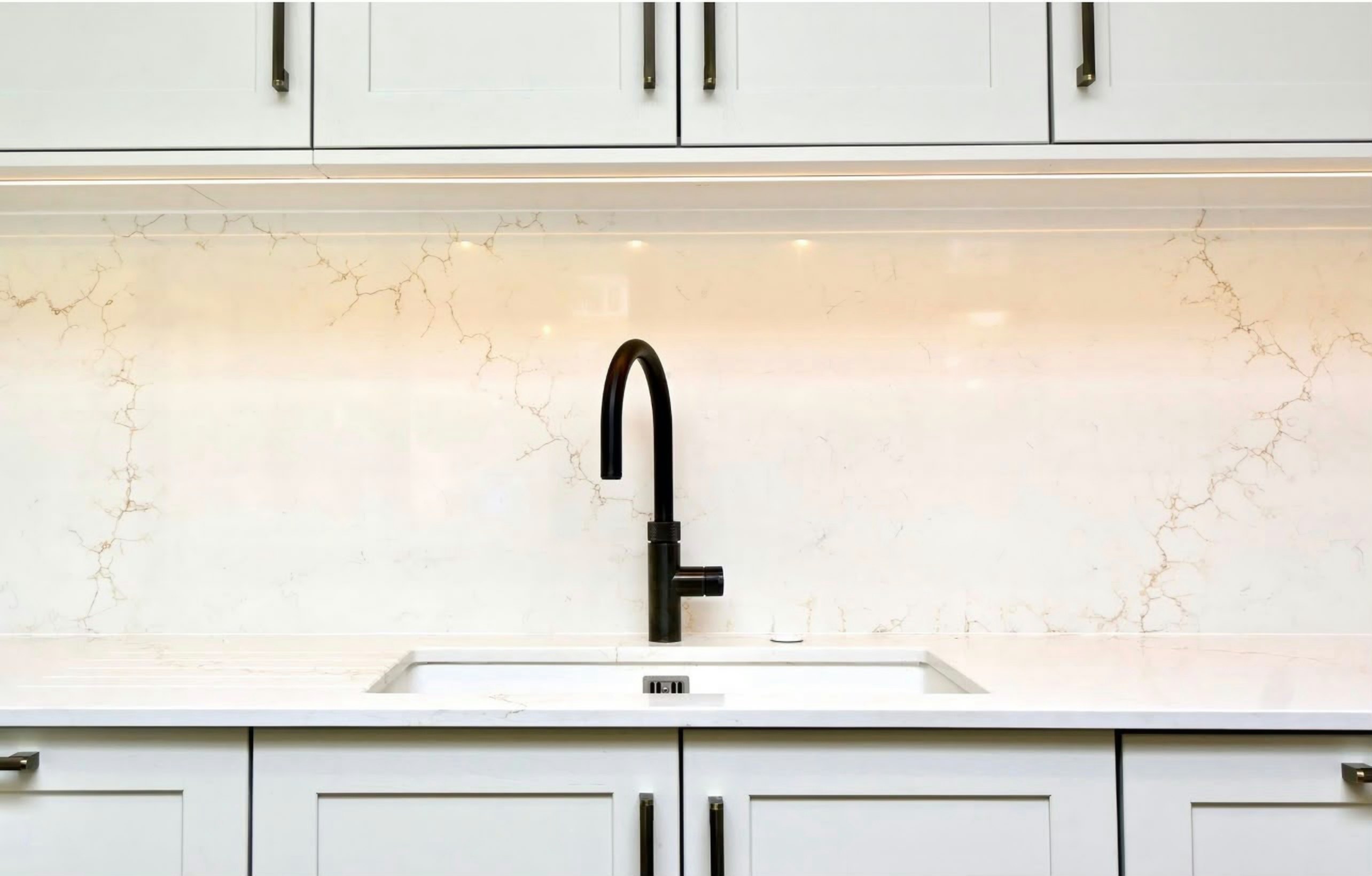 Choosing a surface7 min read
Types of kitchen worktop compared: which is best for your kitchen?
The main types of kitchen worktop are quartz, granite, sintered stone such as Dekton, laminate, solid wood and solid surface. For most busy family kitchens quartz is the best fit; granite suits heavy cooks who want natural stone, and sintered stone suits heat, sun and slim mitred profiles.Read the guide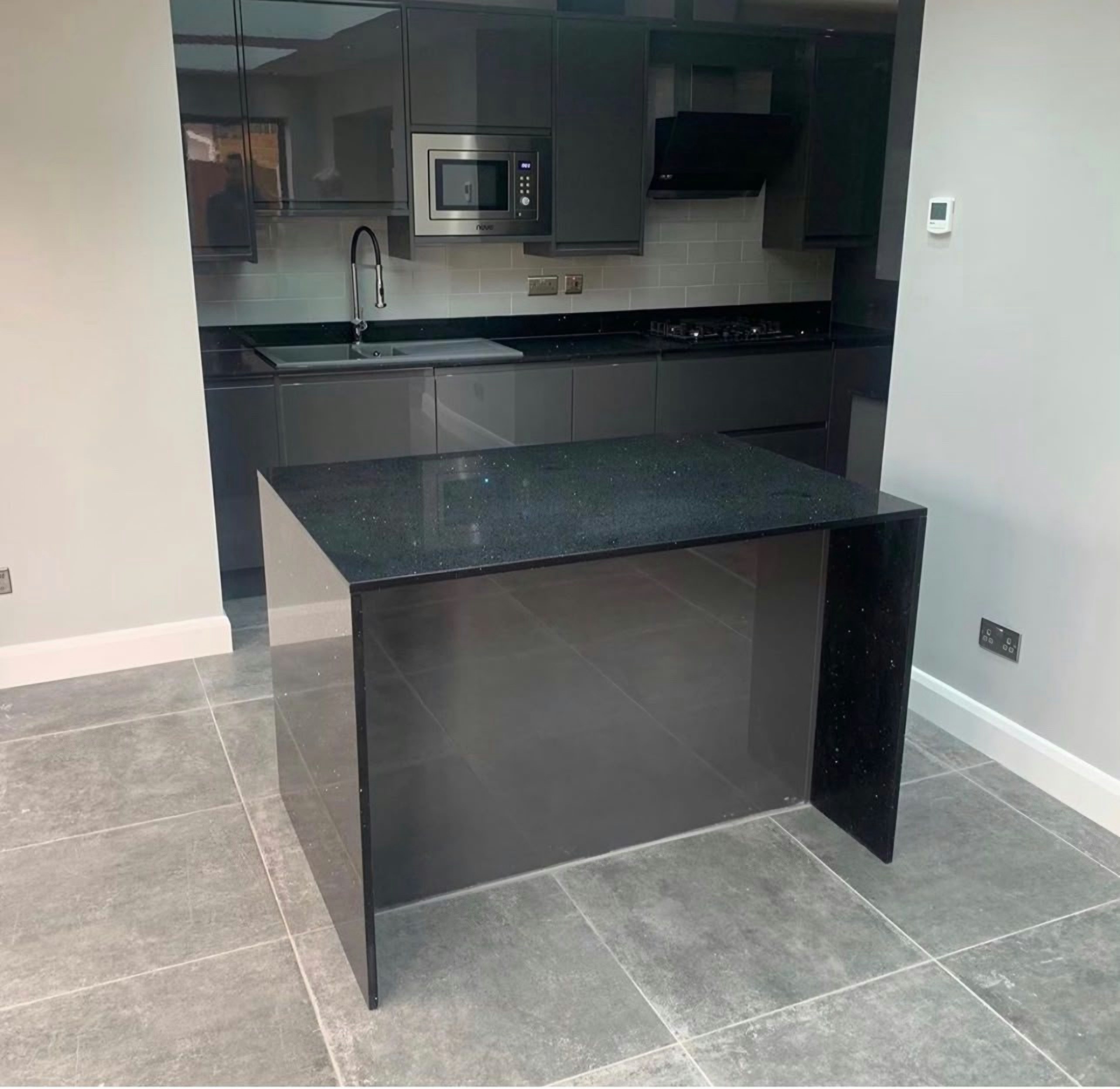 Choosing a surface8 min read
What are quartz worktops? What they are made of, and the pros and cons
Quartz worktops are engineered stone: ground natural quartz bound with pigment and a polymer resin, pressed and cured into slabs. They are non-porous, never need sealing and look the same from one slab to the next. The one rule is heat, because the resin can scorch, so hot pans go on a trivet.Read the guide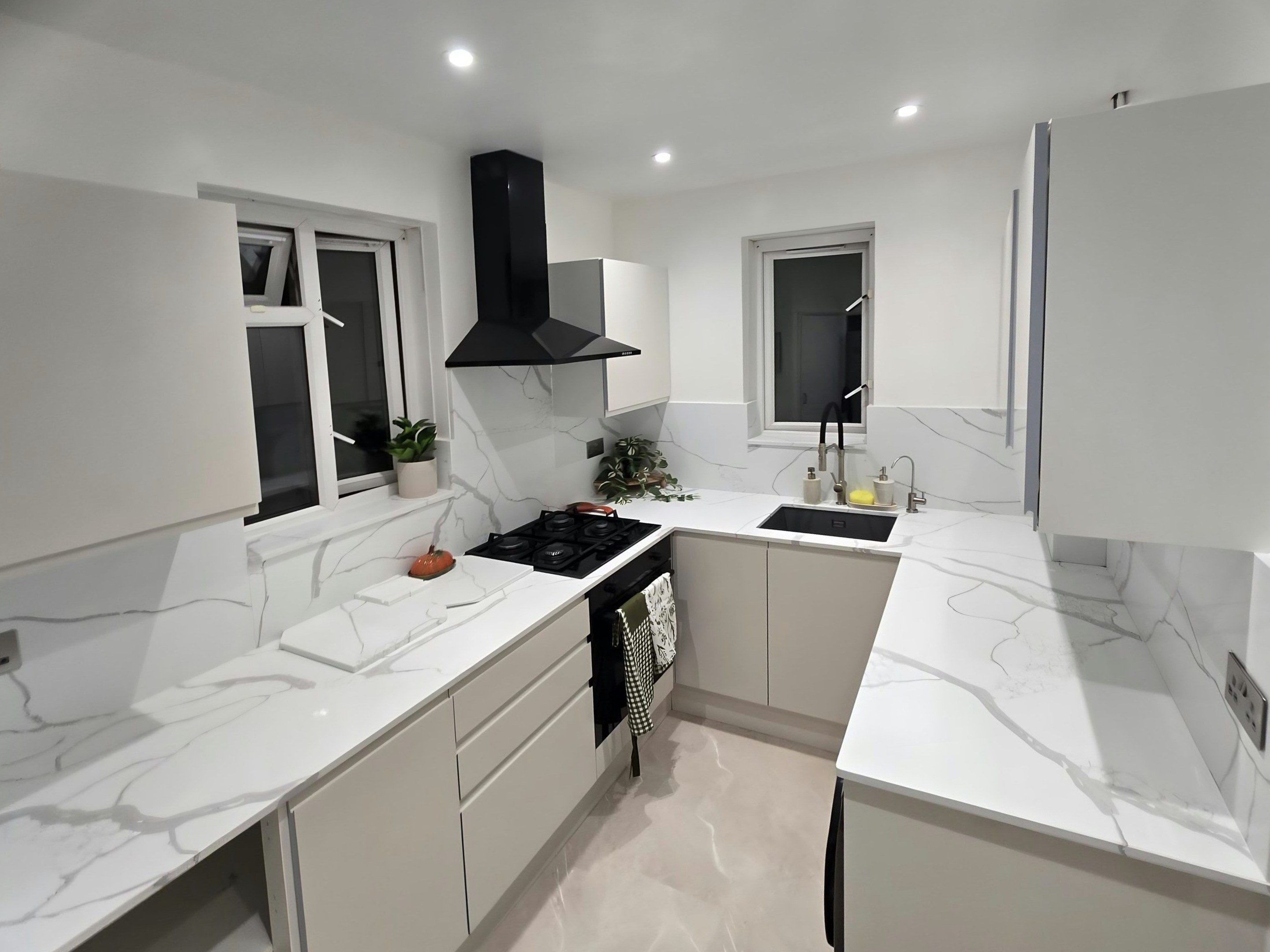 Choosing a surface6 min read
Quartz vs granite worktops: which is better for your kitchen?
For most busy family kitchens quartz is the better worktop: it is non-porous, never needs sealing and looks the same slab to slab. Granite is better if you cook hard and want natural stone, because a hot pan does not trouble it, at the cost of sealing it from time to time.Read the guide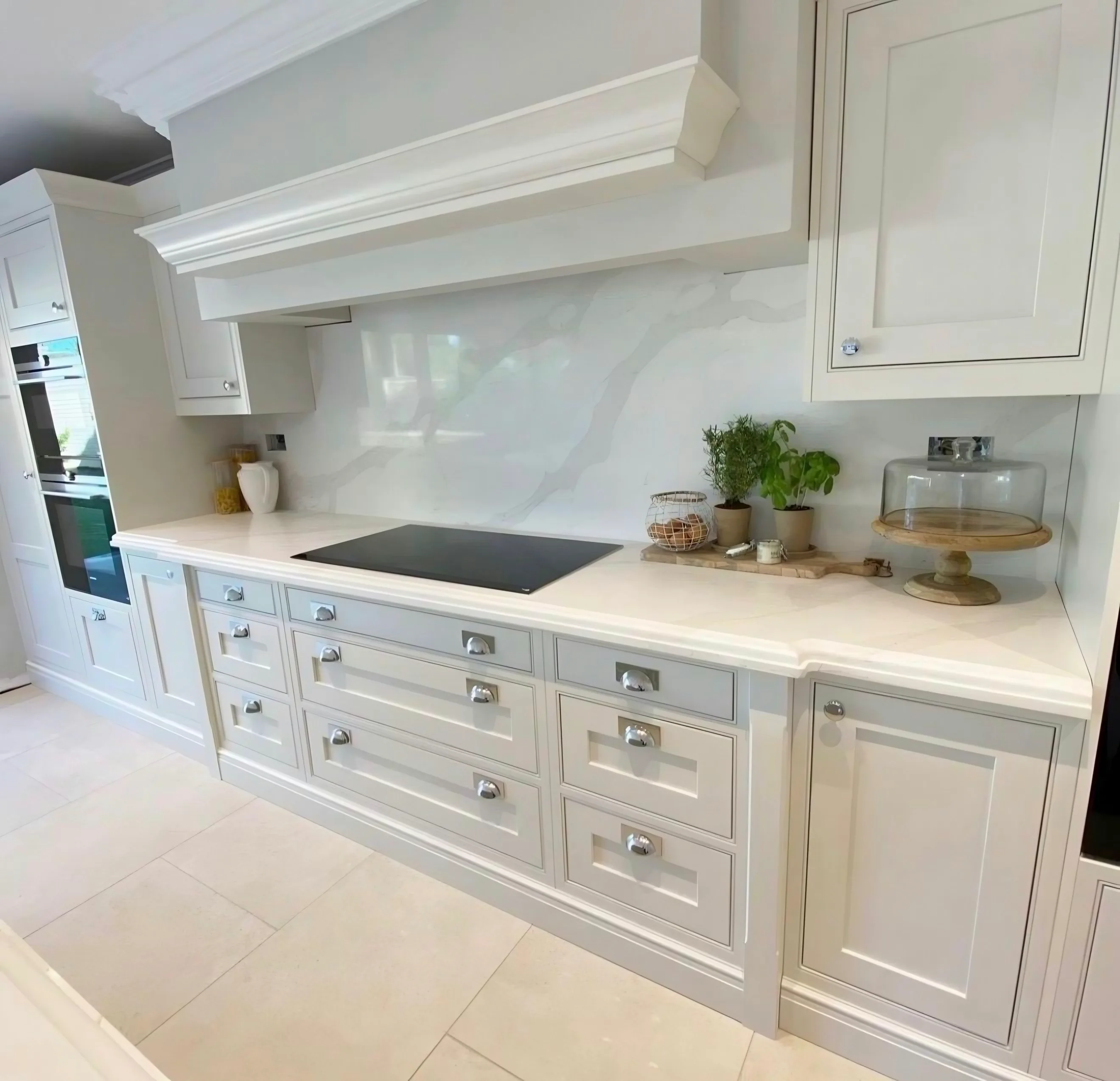 Choosing a surface6 min read
Dekton vs quartz worktops: which is better, and when is each worth it?
Quartz is the better worktop for most indoor family kitchens: consistent, non-porous and quicker to fabricate. Dekton is better where heat, direct sun or a slim mitred edge matter, because it has no resin to scorch, but it is more brittle at thin edges and costs more to fabricate.Read the guide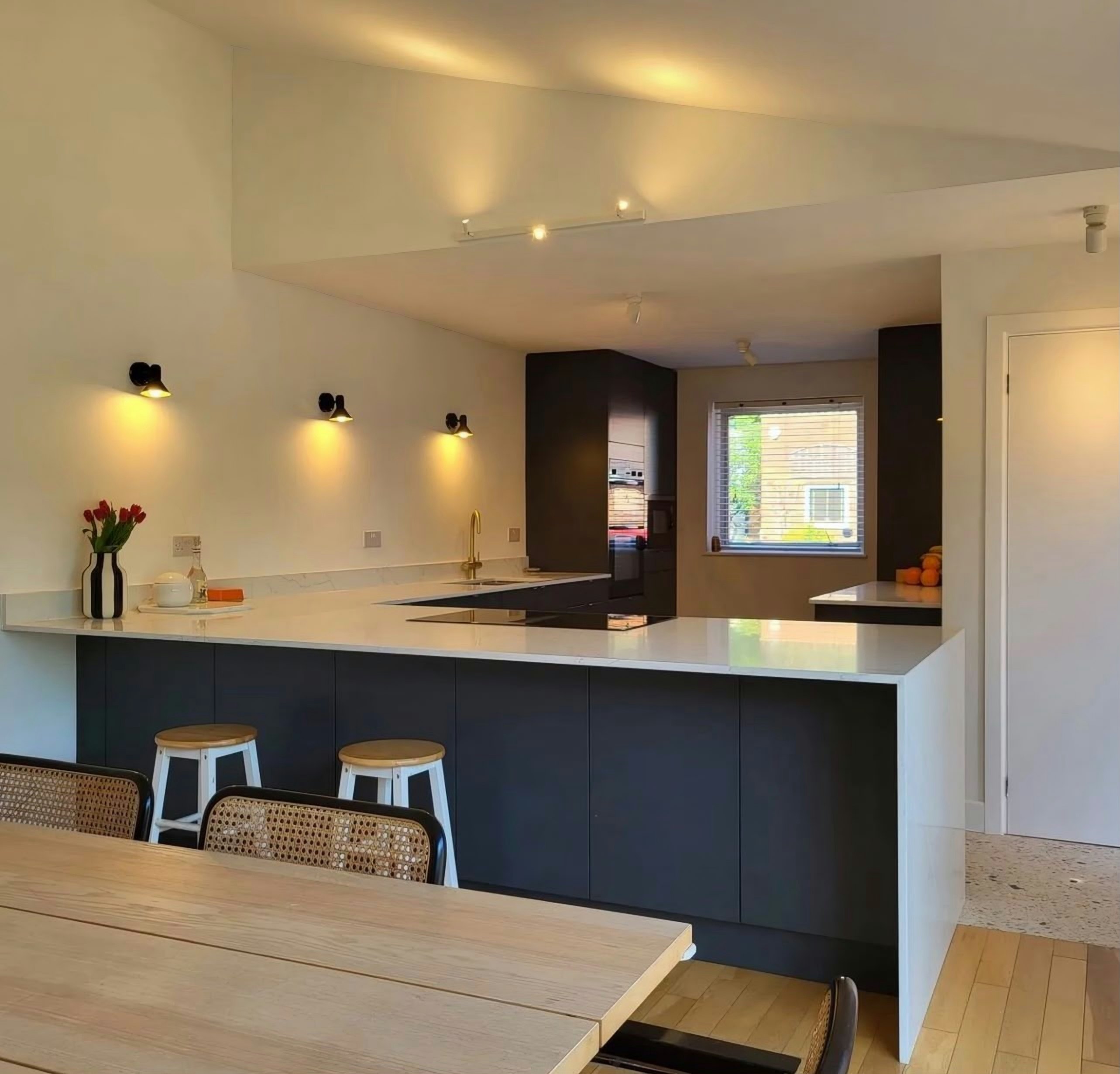 Choosing a surface6 min read
Which stone for a window sill, and why it is cut with the worktop
The best stone for an internal window sill is usually the one your worktop is made of, cut from the same batch at the same template visit. Quartz suits most kitchens and bathrooms, granite suits a sill you will seal, and a notched sill sits neatly inside the reveal.Read the guide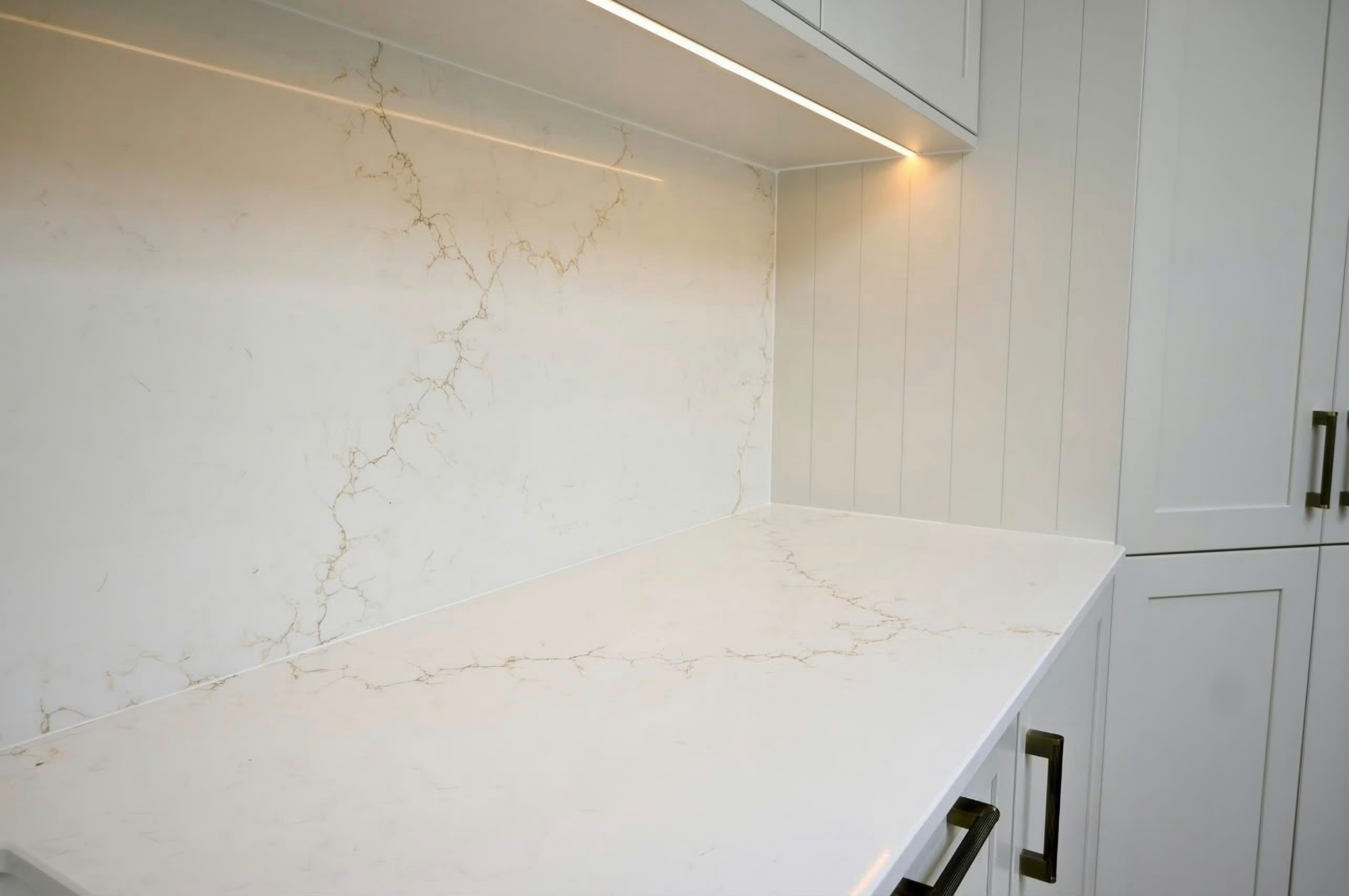 Choosing a surface6 min read
Composite vs stainless steel sinks: which suits a stone worktop?
Both work under a stone worktop, so choose on looks and care. Stainless steel shrugs off a dropped pan and boiling water but shows water spots and fine scratches. A granite composite sink is a matt, solid colour that hides water marks and can match or contrast with the stone.Read the guide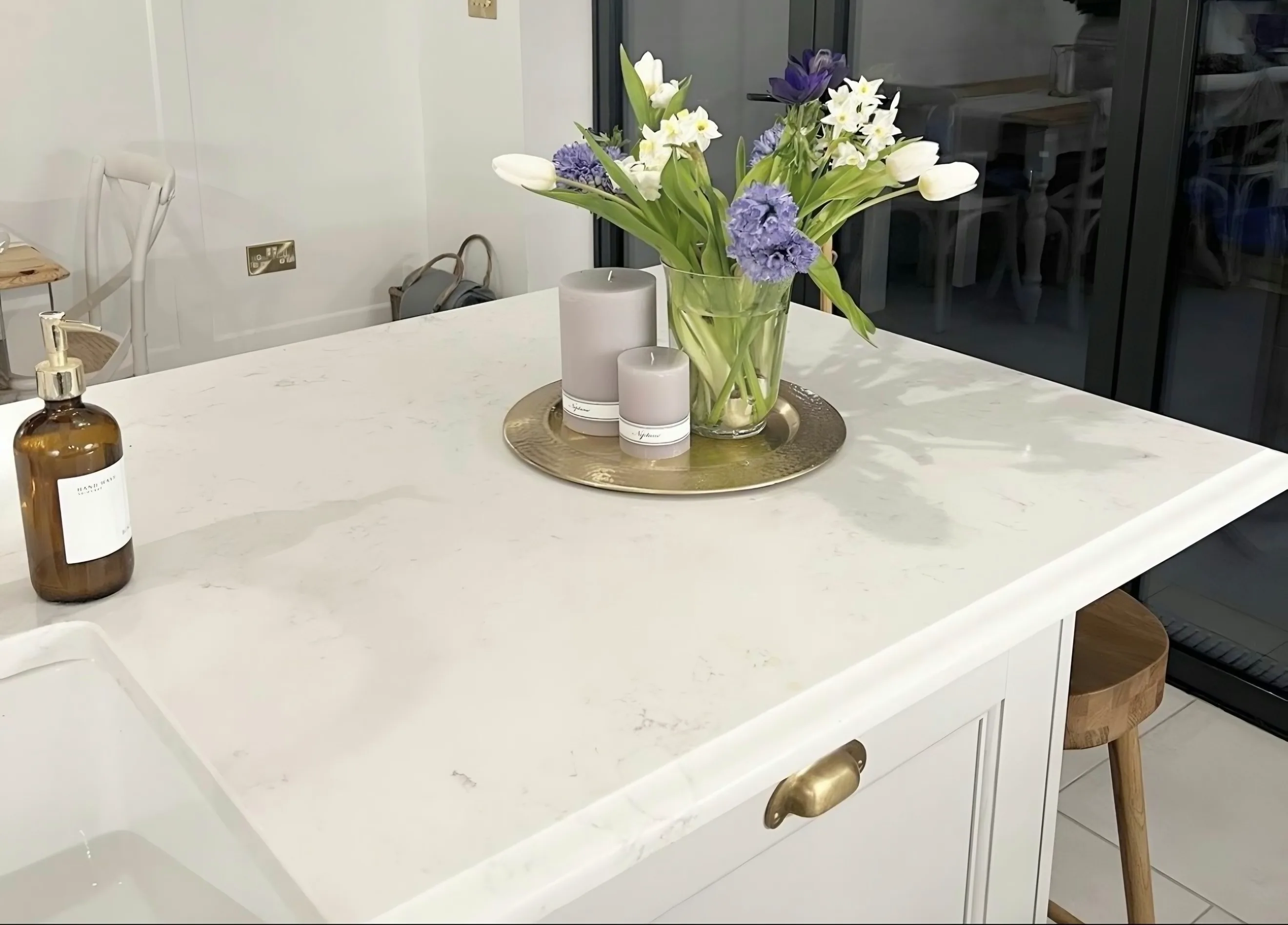 Choosing a surface6 min read
Kitchen upstands: height, thickness, tiling above and the corners
A kitchen upstand is a low strip of the worktop stone, commonly around 100mm high, standing on the worktop against the wall. It is cut from the same slab, siliconed to the worktop rather than grouted, and priced by the linear metre, with tiles or paint above it.Read the guide03 / 04
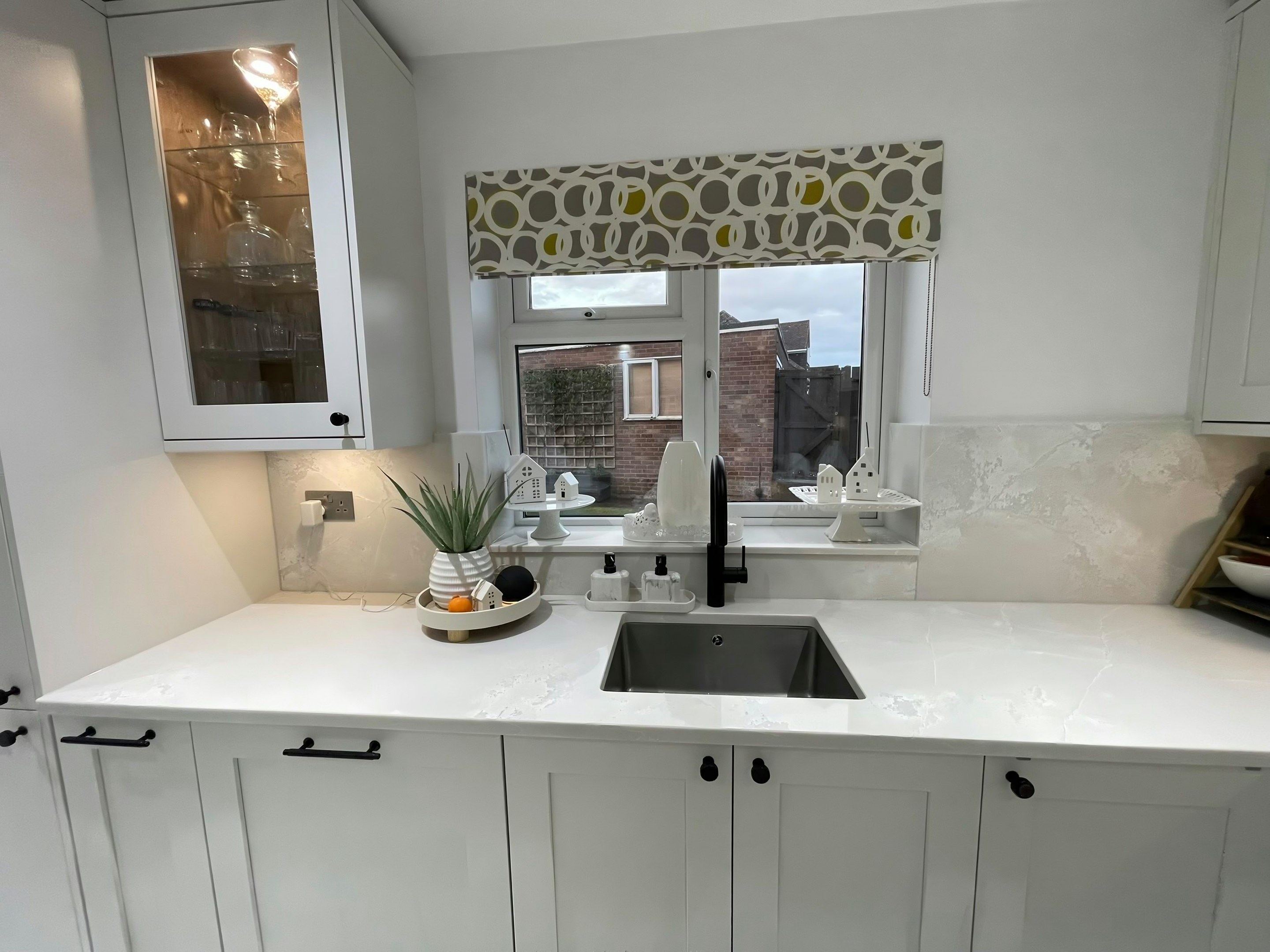
Aftercare
 Aftercare6 min read
Caring for a stone worktop: the honest maintenance guide
What to do in the first week, what to clean with, what will ruin it, when granite needs sealing, and how to deal with a stain or a chip without making it worse.Read the guide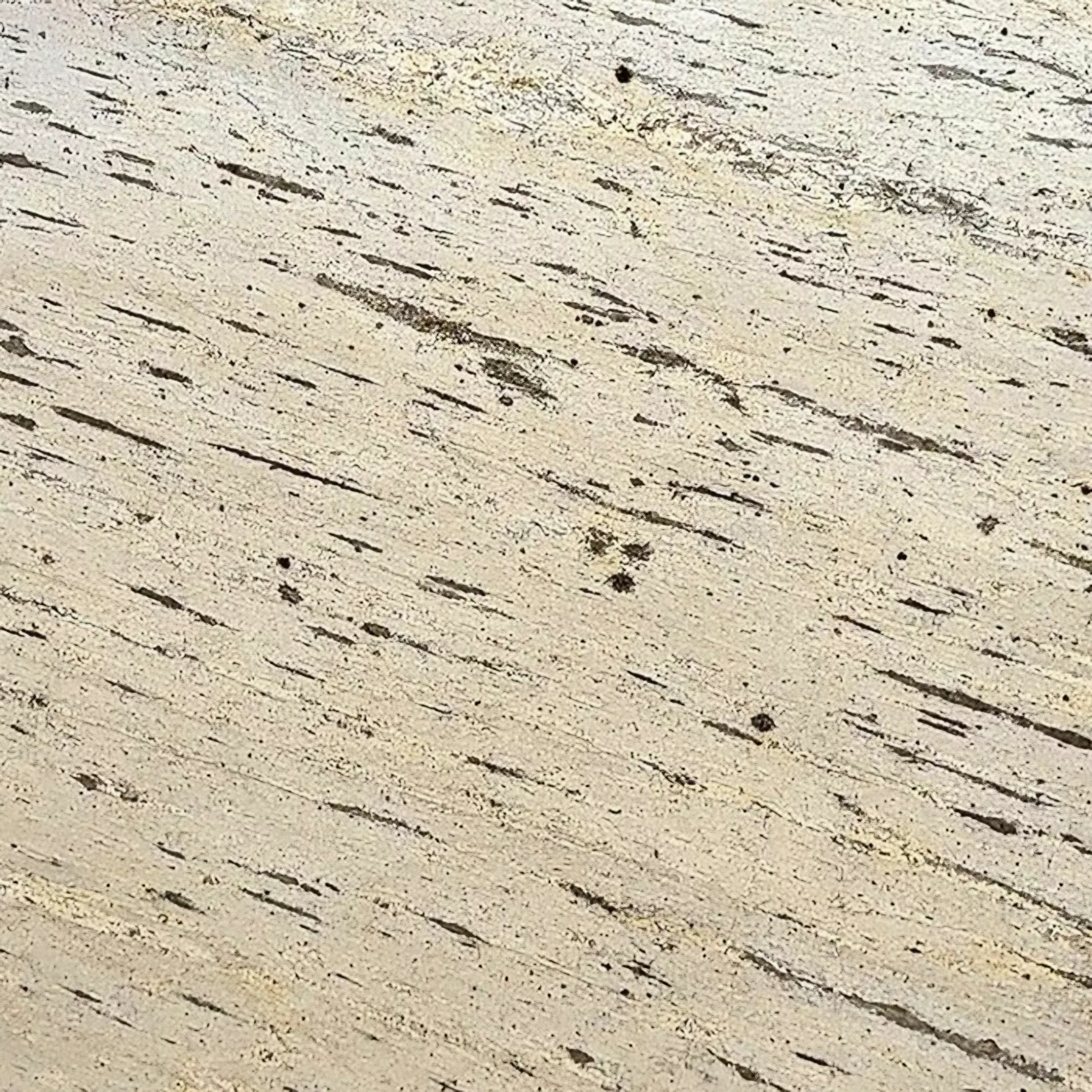 Aftercare9 min read
Sealing a granite worktop: when it needs it, and how to do it
How to tell whether your granite actually needs resealing, why the annual rule everyone repeats is wrong, and how to apply a sealer without leaving a haze you then have to fix.Read the guide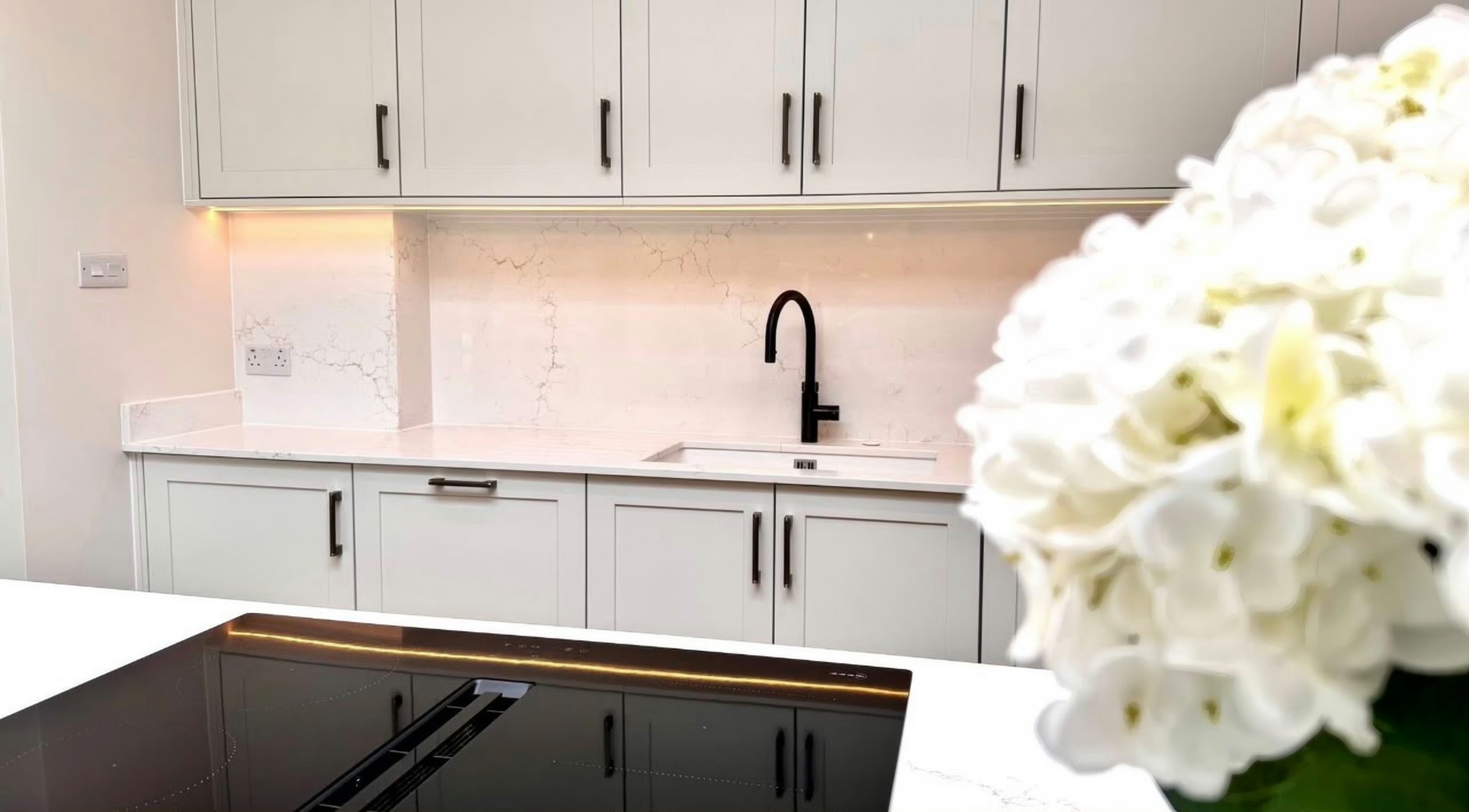 Aftercare11 min read
Removing stains from a stone worktop: what actually works, by material
Stains and etches look alike and need opposite treatments. How to tell them apart, what to do in the first minute, the poultice method properly explained, and what will make it permanently worse.Read the guide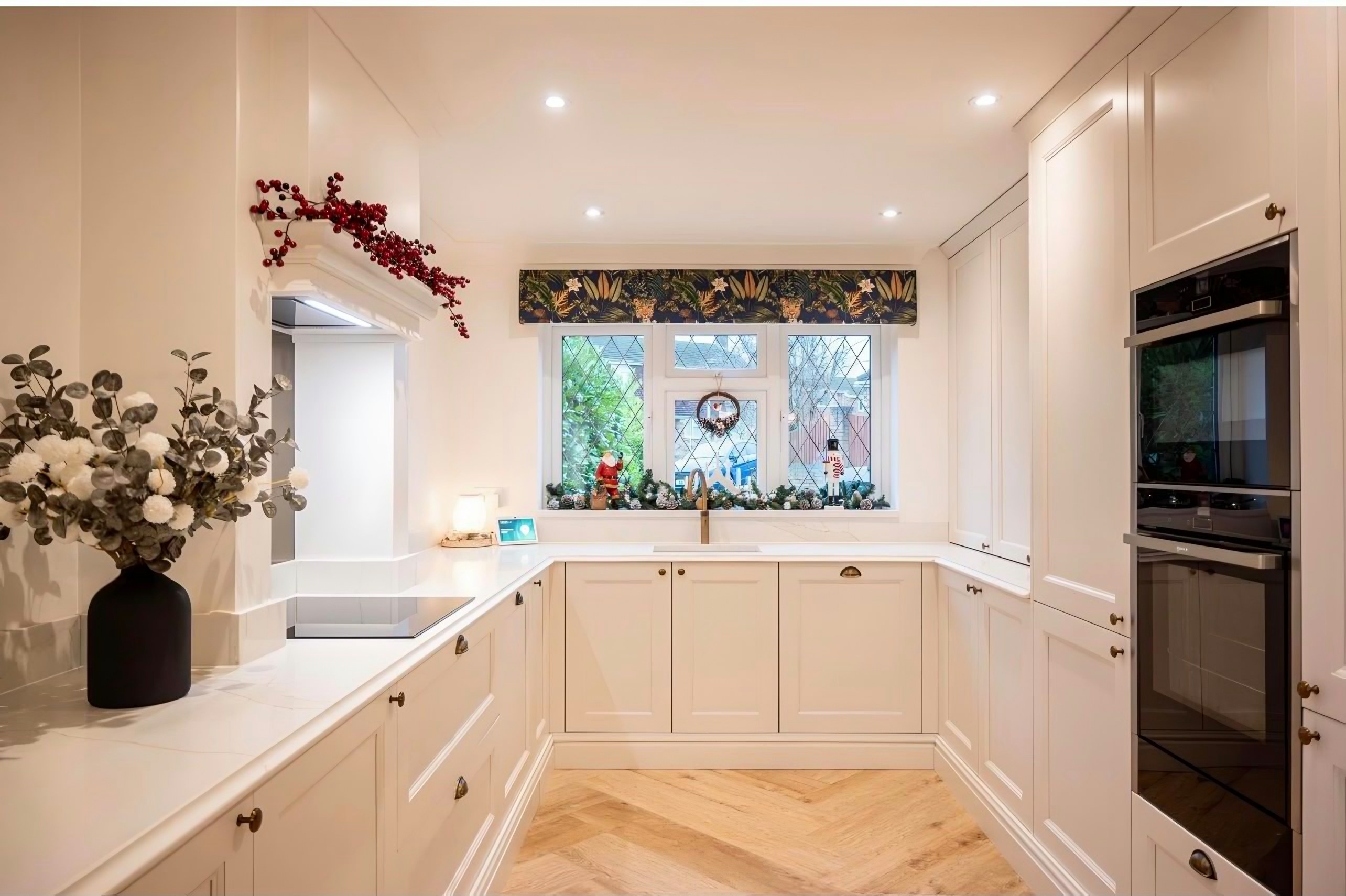 Aftercare9 min read
Can you cut directly on a stone worktop, and will it scratch?
You can, and the worktop will usually be fine. Your knives will not be. What actually scratches each of the three materials, why most marks are not scratches at all, and why heat is the real risk.Read the guide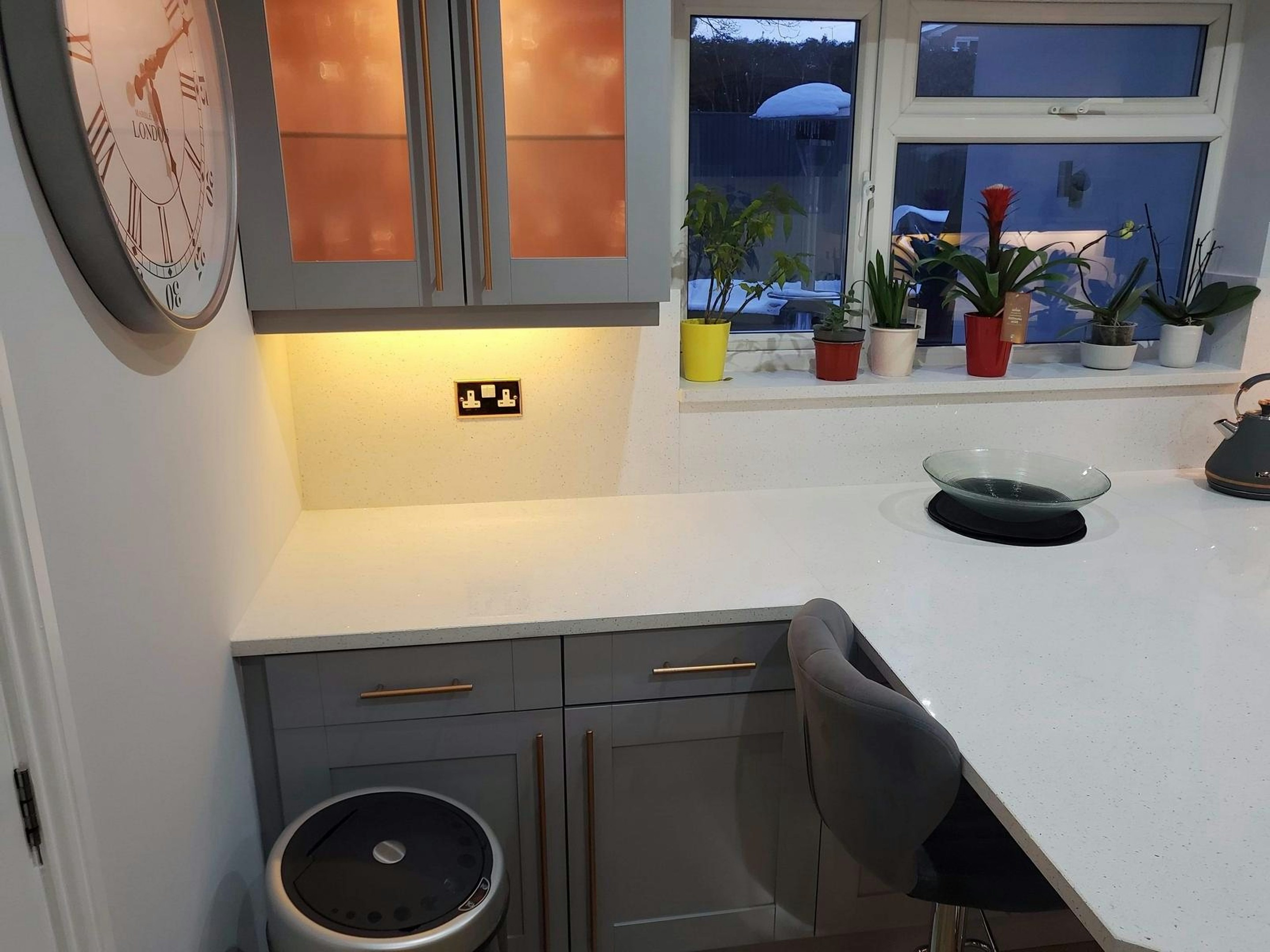 Aftercare7 min read
How to clean quartz worktops: daily care, stubborn marks and what to avoid
Clean a quartz worktop with warm water, a little washing-up liquid and a soft cloth, then dry it. For a deeper clean use a pH-neutral stone cleaner. Avoid bleach left standing, oven cleaner, abrasive pads and heat, because the resin in quartz is what they damage.Read the guide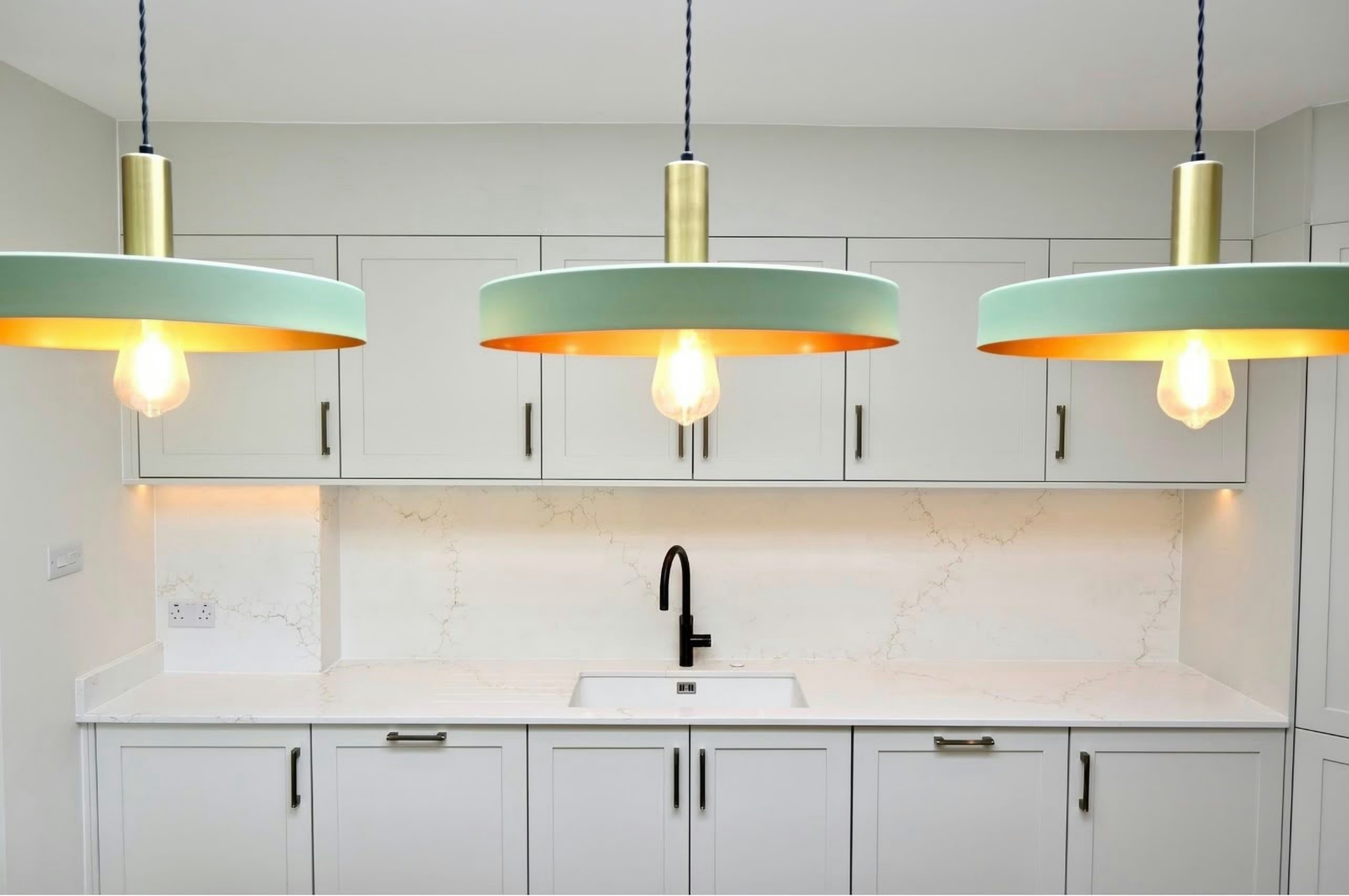
Rather just ask someone?
Reading is fine, but most questions are answered faster on the phone. We will tell you what suits your kitchen even when that is the cheaper option. We would rather fit the right surface than the dearest one.
- Lead time from template
- 5–10 working days
- Material supply from
- £110/m²
- Workmanship guarantee
- 5 years
Looking for costs, problems and London logistics rather than a buying decision? Read the blog
Next step
Know what you want? Get it priced properly.
Send plans, a sketch or a few photos with rough measurements. You will get an itemised written quote, with every cut-out and edge listed rather than bundled into one number.