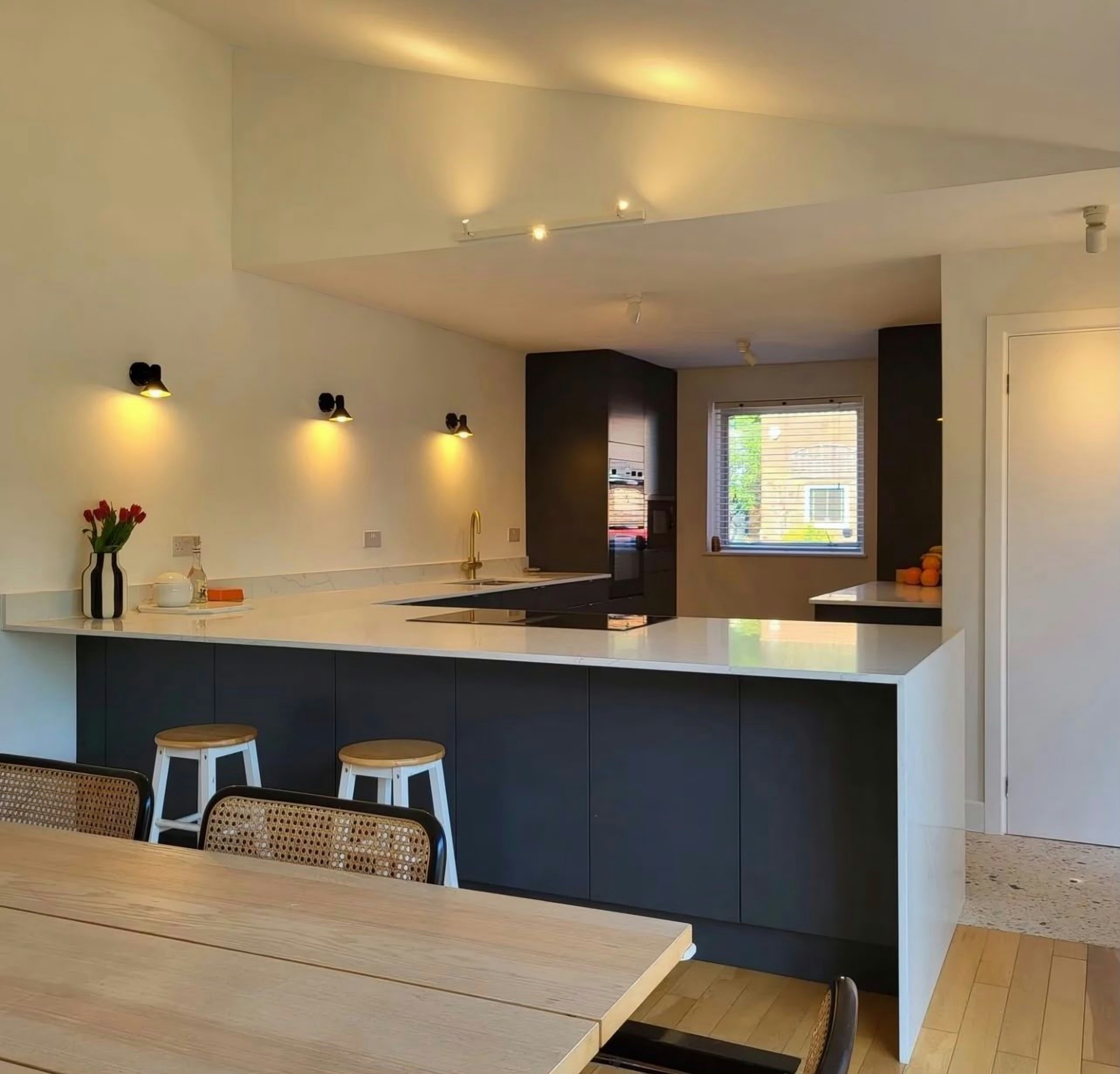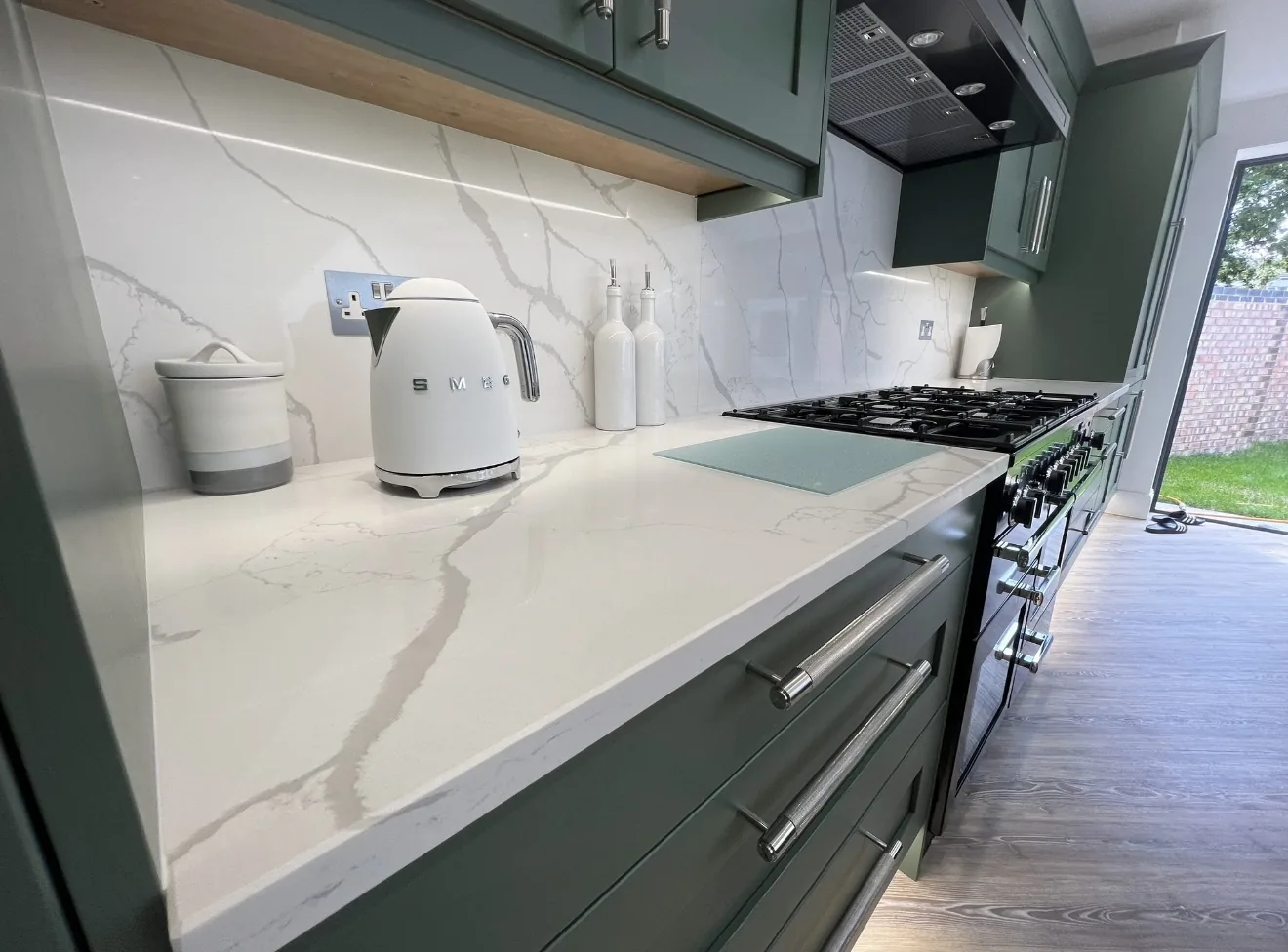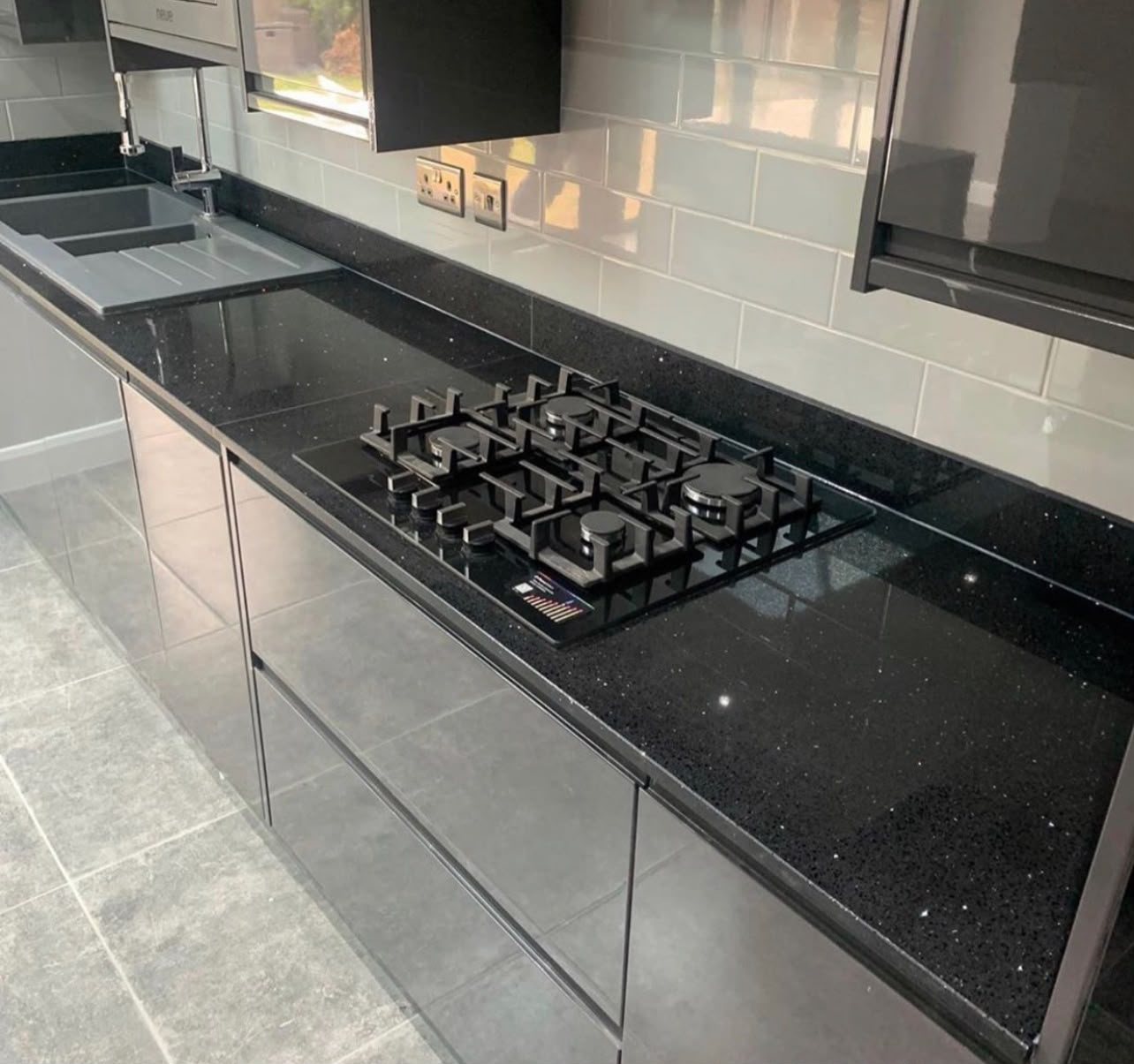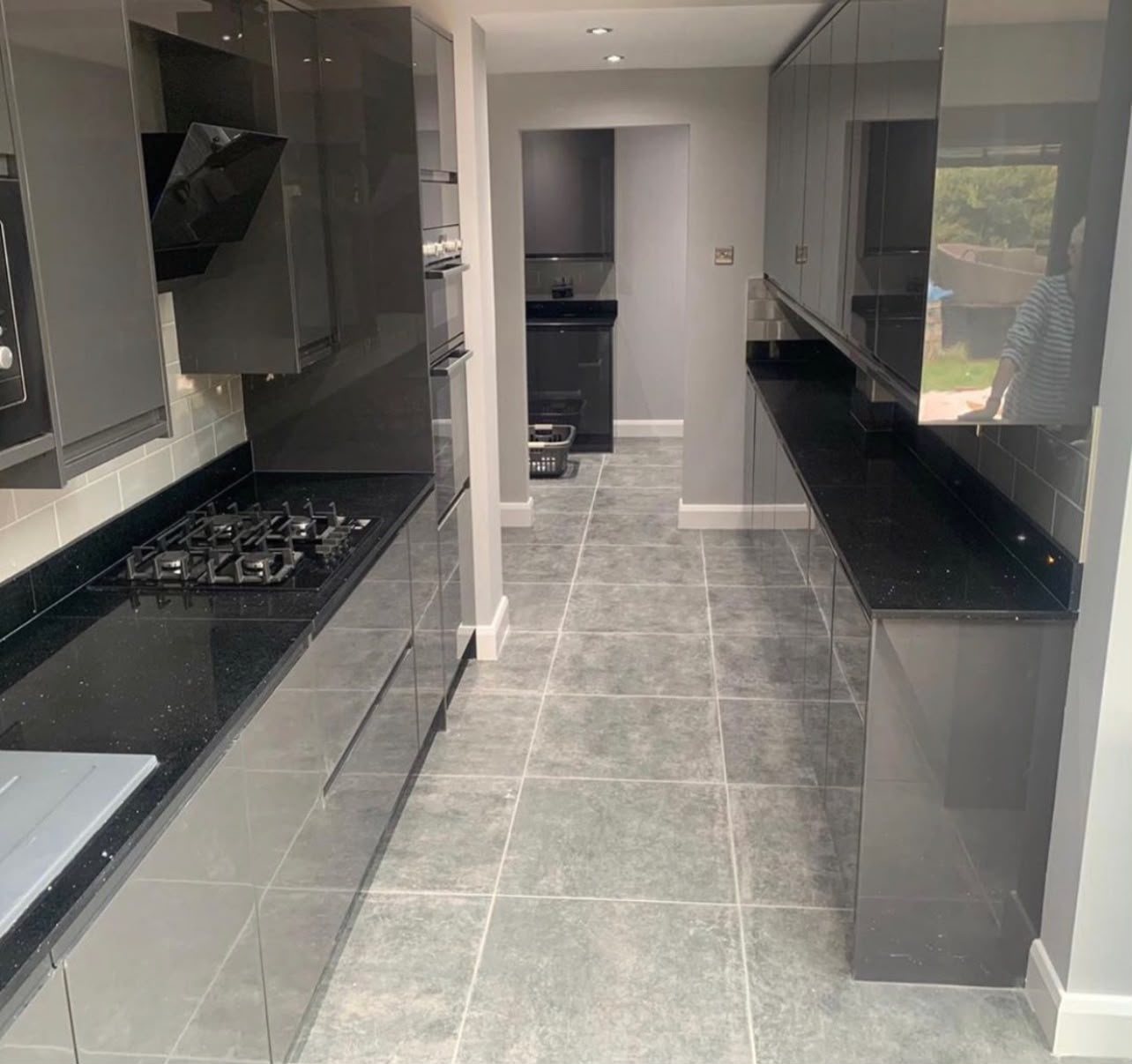
A vanity top is a small piece of stone with a great deal happening on it: a basin, one or two tap holes, a splash return and often a window reveal, all within a few hundred millimetres of each other. On a kitchen run you can slide a join or a socket along a metre of stone; on a vanity there is nowhere to move anything. That is why a short piece repays being drawn properly. Worktop Worx cuts vanity tops, shelves and window returns from the same slabs as its kitchen worktops, and this guide covers the decisions before you order one.
Key points
- A vanity top is the same stone as a kitchen worktop, cut to bathroom depths and often from offcut stock
- Quartz is the easy choice in a bathroom: non-porous and never sealed; granite is sealed before use
- The top is cut for the basin and tap you bought, so both must be on site before templating
- We seat and seal the basin; a plumber disconnects before and reconnects after, once the sealant has cured
- Order sills, shelves and returns with the top, and with the kitchen if you can, for a real match
01 / 09
Which stone is best for a bathroom vanity top?
Any of the stones we fit will make a good vanity top, and the choice turns on one thing a bathroom does that a kitchen does not: water sits on a vanity longer than on a worktop, and the room fills with steam. A surface that needs nothing applied to it is the practical one. Our bathroom worktops and vanity tops are cut from the same material as a kitchen, in the narrower widths a bathroom takes.
By material
- Quartz: non-porous and never needs sealing. The easy choice in a room that is splashed constantly
- Granite: porous, varies by stone, so a granite vanity is sealed before it is used and re-sealed over time
- Sintered stone and Dekton: effectively zero porosity and never needs sealing
Cosmetics, toothpaste and anything acidic are harder on a vanity than cooking ever is on a kitchen worktop, because they tend to sit on it long before anyone wipes them off. That is the real argument for a non-porous surface in a bathroom, more than the steam.
02 / 09
Is quartz a good choice for a bathroom?
Yes, and for most bathrooms it is the easiest choice. Quartz is non-porous, so water, soap and toothpaste sit on the surface and wipe off, and it never needs sealing, which in a room that is splashed constantly and cleaned rarely is the property that matters most. It is also consistent, so a vanity can match a kitchen in the same design closely if both are cut together.
The one rule quartz has in a kitchen is heat, because the resin can scorch, and in a bathroom that simply means anything hot is set down on a mat rather than on the stone. Keep bleach left to sit and harsh limescale removers off it, rinse anything that splashes onto it, and warm water with a little washing-up liquid does almost everything.
03 / 09
How thick should a stone vanity top be?
Usually whatever the slab is. Quartz and granite are commonly produced in 20mm and 30mm, and a vanity taken off a kitchen slab arrives in whatever the kitchen was specified at. Thinner material saves almost nothing over a piece this size, and what it costs in stiffness turns up on the day somebody has to lift it.
Visually, a 20mm top reads slim and modern and a 30mm top more solid. If you want a deeper edge without a heavier piece, the front can be mitred, but on a small bathroom top a plain edge at the slab thickness is the normal detail. Our guide to worktop thickness covers what each does and does not change.
04 / 09
Should you choose an undermount or inset basin?
Either works; the decision is about looks and cleaning, and it has to be made before the top is machined. An undermount basin is bonded under the stone and the aperture is polished, because you look straight down into it every time the basin is used; it looks cleaner and lets you wipe straight into the bowl. An inset basin drops in from above and hides that cut edge, which makes it more forgiving and usually cheaper.
Whichever you choose, the top is cut for the basin you bought, not for a standard one, and the tap holes are drilled to the tap you bought rather than to a standard spacing. A three-hole set, a single monobloc and a wall-mounted spout that needs nothing drilled are three different tops. Our guide to undermount, inset and Belfast sinks covers the same choice in a kitchen.
05 / 09
Can you replace just the vanity top?
Yes, if the vanity unit is sound. The same logic as replacing a worktop without replacing the kitchen applies: the unit stays, only the surface changes, and the unit has to be fixed, level and strong enough to carry stone. A wall-hung unit puts the whole weight into the wall rather than the floor, so what the wall is built of stops being a detail.
Templating is done off the fitted unit, never off a plan, because a short piece has no slack in it and a few millimetres of movement in the carcass shows on a top this size. If the unit itself is being changed, fit the new one first and template once it is in.
06 / 09
Is replacing a vanity top a big job?
Not usually. A vanity fit is a short visit with one or two pieces in it, and the piece itself is small enough to carry; a double vanity is the exception and behaves like a kitchen worktop on the stairs. The work is in the sequence around our visit rather than in the visit itself.
Step by step
Step 1: Plumber disconnects
Before we arrive, a plumber disconnects the tap and waste so the old top can come off.
Step 2: Template off the fitted unit
With the basin and tap on site, so the aperture and the holes are set out from the real objects.
Step 3: Cut and polish in the workshop
The aperture is cut, an undermount basin is bonded and supported, and the cut edge is polished.
Step 4: Fit and seal
The top is scribed to the wall, bedded and sealed along the wall junction, and the basin seated and sealed.
Step 5: Plumber reconnects
Once the sealant has cured, the plumber reconnects the water and waste.
What sits outside the job: we do not supply or fit the vanity unit, the basin or the tap, and we do not tile, plaster or make good the wall around a finished top. A new tap hole cannot be cut into a top that is already fitted, so the tap is settled first.
07 / 09
Can a vanity top come from a kitchen offcut?
Very often. Standard vanity depths are far narrower than a kitchen run, so most vanity tops begin life as an offcut from another room. A narrow top nests into waste a kitchen cut list would otherwise throw away, which makes it the cheapest stone in the job, and it is why a material you were told was out of budget across a kitchen is often affordable across one basin.
It cuts both ways. Offcut stock is finite, so the choice depends on what is on the rack rather than on a full slab order, and if you want a matching shelf or window board, they have to be ordered together while the offcut still exists. Where the kitchen uses the whole slab there is no offcut worth having, and the vanity is priced against material bought for itself.
08 / 09
Can the sill and shelves match the vanity top?
Yes, and a bathroom window is stone as much as the vanity is. Where a bathroom window sits over the basin, a reveal, a sill or a splash return off the vanity top is cut from the same material and templated in the same visit, which is the only way the shade and the pattern carry across. Our guide to stone window sills covers standard and notched sills in more detail.
A bath surround, a sill and a shelf above the towel rail can all come out of the same remnant, so they are drawn onto the plan while there is still material to draw them on. A low window over the basin also caps the height of the splash return, which is worth knowing before you pick a tap.
09 / 09
Should you order the vanity top with the kitchen?
If you are doing both, yes. Ordered together, both come off the same slab run and the match is real; ordered a year apart, engineered stone will have moved batch and granite will be a different slab, so the two read as related rather than identical. In separate rooms that is normally fine, but it is a choice worth making on purpose.
Ordering together also helps the offcut arithmetic, because the bathroom is drawn while the kitchen is still on the bench, and one template visit can cover both rooms if both are ready. Per square metre a vanity is the same stone at the same supply rate as a kitchen, £110 to £550/m² depending on the range: most quartz sits between £150 to £270/m², granite between £148 to £250/m² and sintered stone between £250 to £300/m², supply only. A vanity is priced as its own piece, not as a length of worktop.