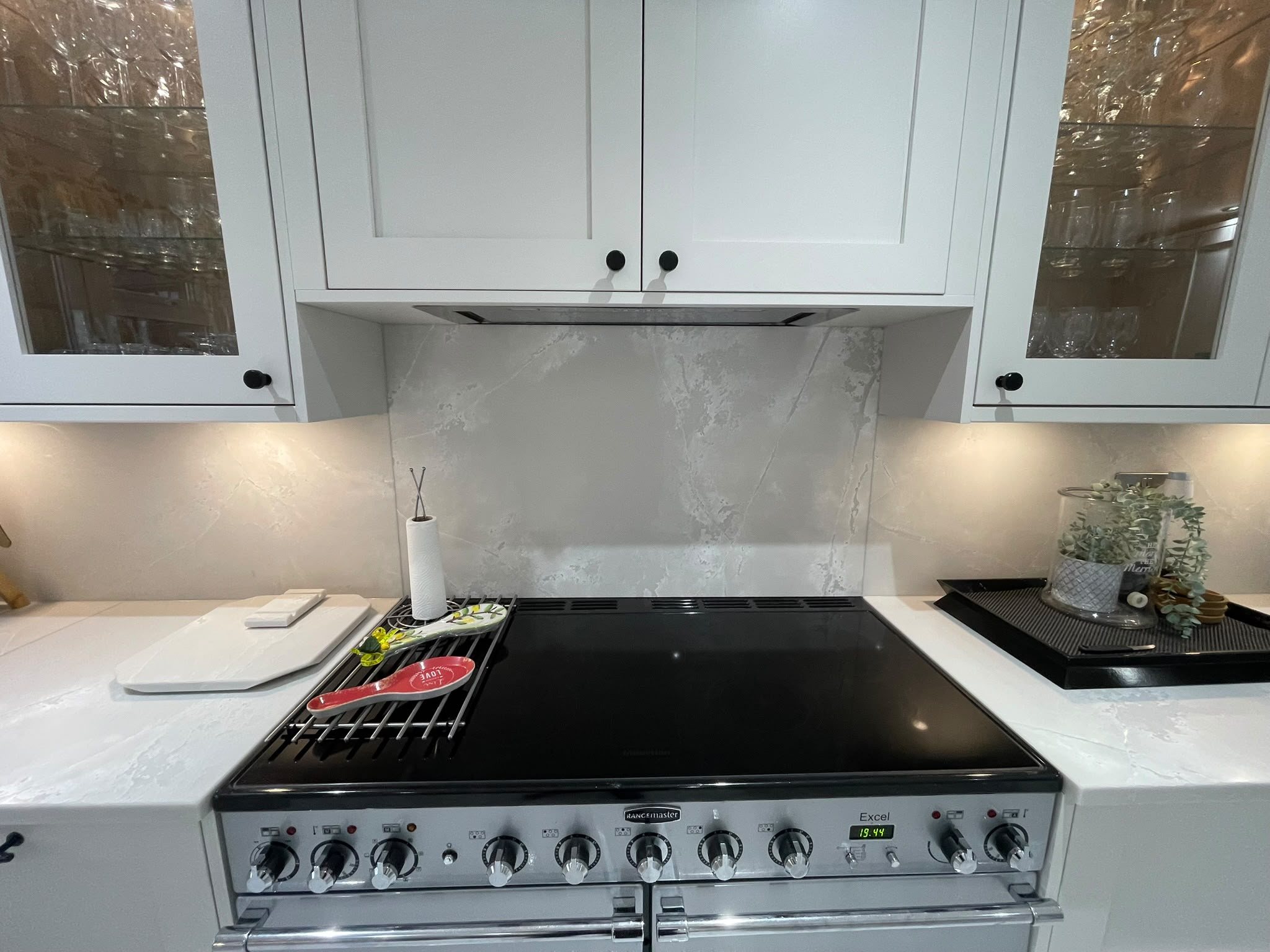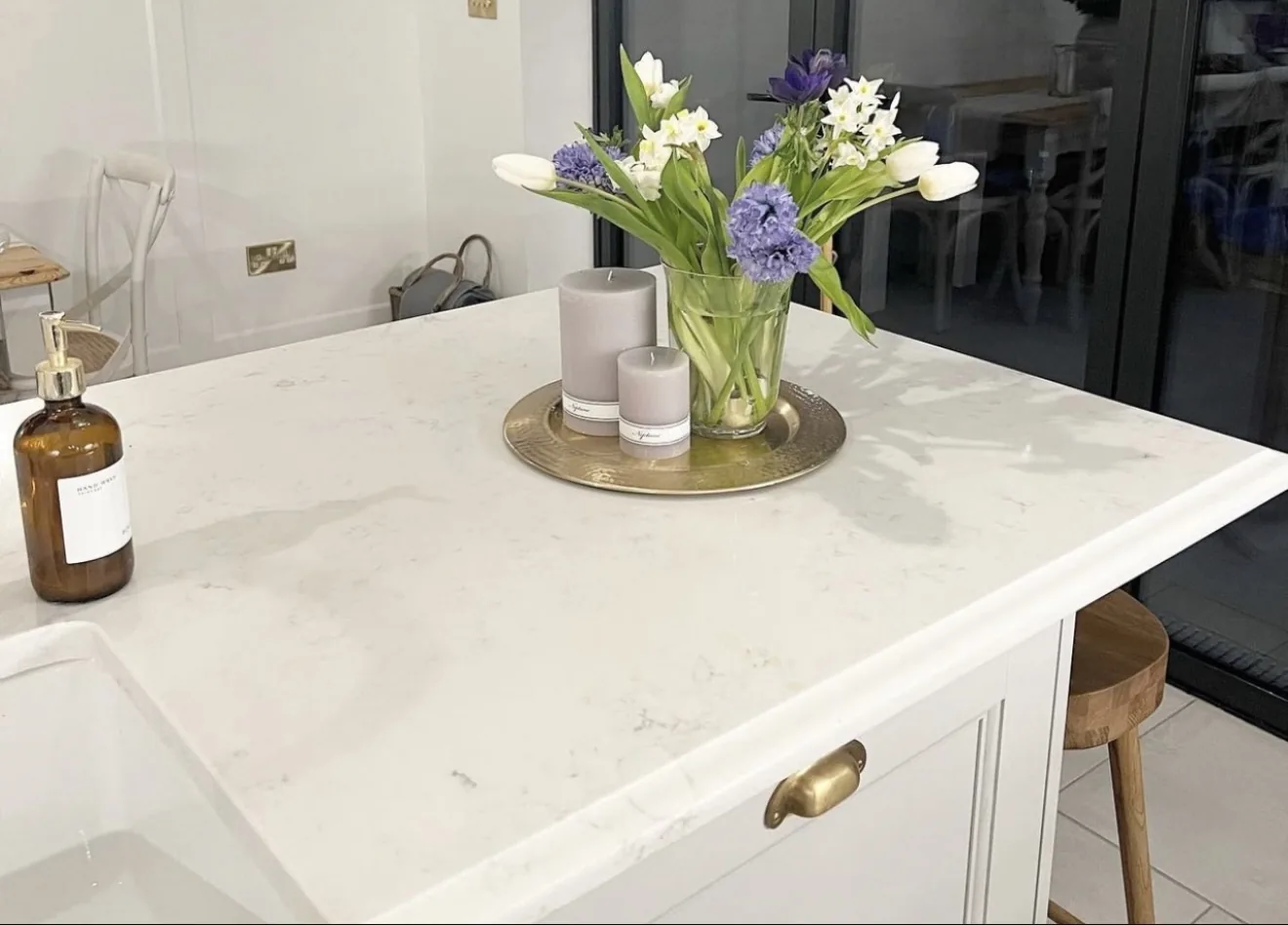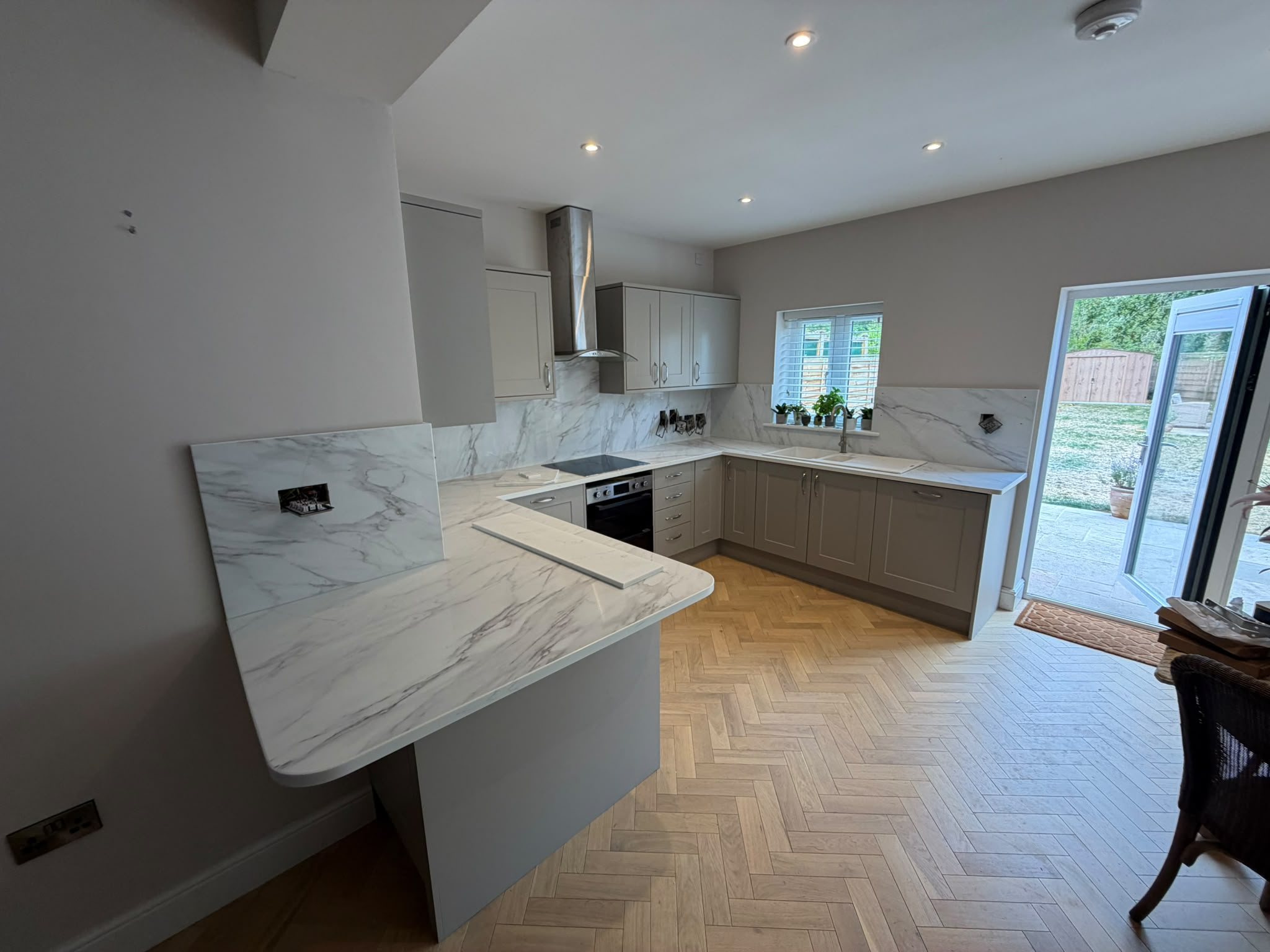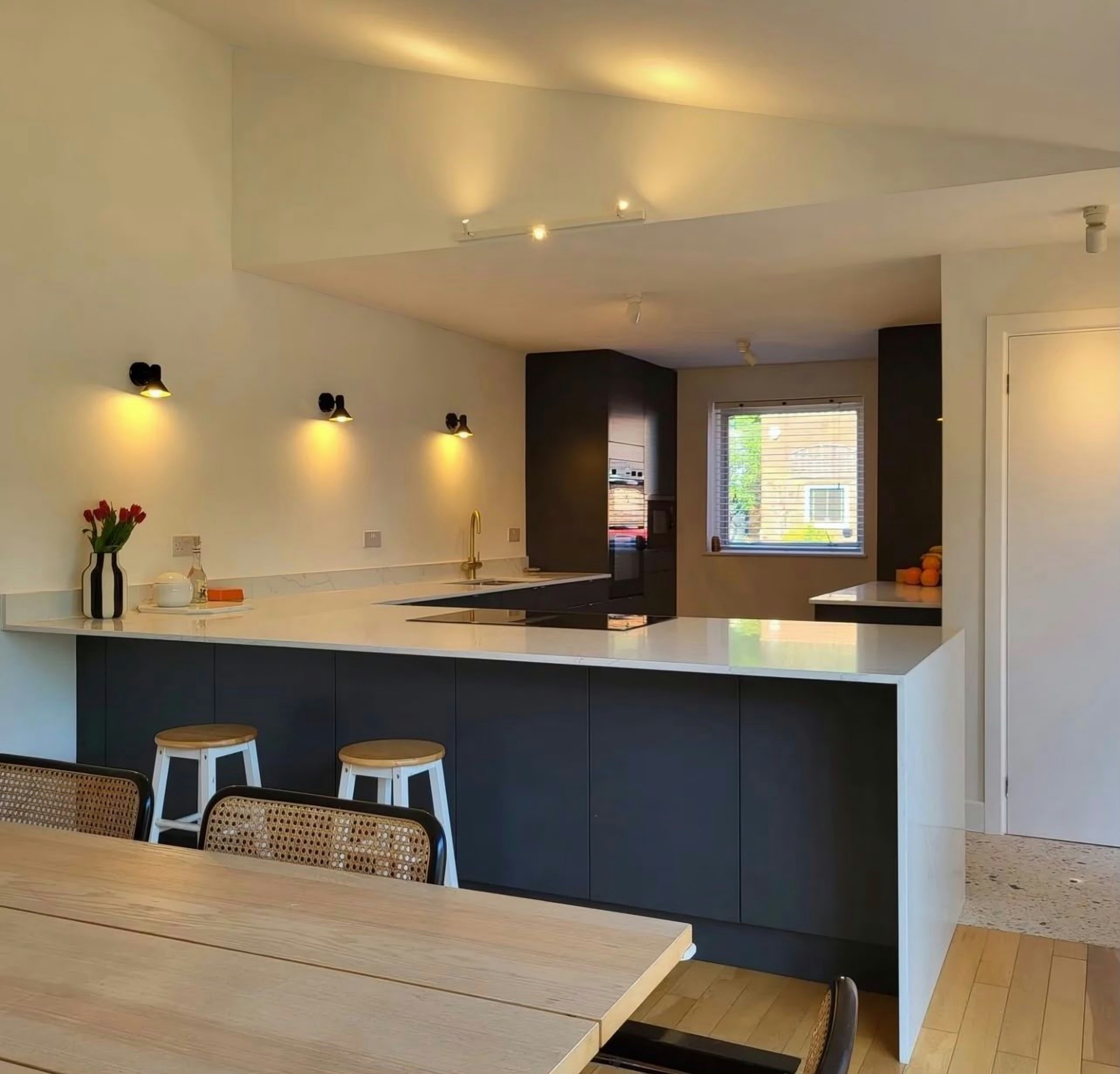
A window sill is the smallest piece of stone in most kitchens and one often added as an afterthought, which is exactly when it goes wrong: a different batch, a second visit, a shade that does not quite agree with the worktop beneath it. Decided at the right moment it costs very little, because it usually comes out of stone you have already paid for. This guide is about internal sills, the board inside the window reveal; the outside of the building is a different trade. Worktop Worx cuts sills from the same slabs as the worktops it fits.
Key points
- For an internal sill, use the worktop stone, cut from the same batch at the same template visit
- Quartz suits most kitchens and bathrooms; granite needs the same sealing as the worktop; sintered stone suits direct sun
- A notched sill is scribed into the reveal; a standard sill butts up to it
- A sill is usually the worktop thickness and often comes out of the offcut, so mention it at quoting
- It is priced as a piece, not by area, and the material is the same supply rate as the worktop
01 / 08
Which stone is best for a window sill?
Usually the stone your worktop is made of, and the choice between our stone window sills comes down to the same properties as the worktop decision. A sill takes splashes from a sink below it and condensation from the glass above, so a surface that shrugs off standing water is the practical one, and every stone we cut is far better at that than a painted timber board.
By material
- Quartz: non-porous and never needs sealing, so water standing on it from a wet window does nothing. The easy choice in a kitchen or a bathroom
- Granite: porous, varies by stone, and sealed on installation, topped up over time. Hard-wearing and indifferent to heat, but give the sill the same water test you give the worktop
- Sintered stone and Dekton: effectively zero porosity and never needs sealing. The one to consider for a sill in direct sun all afternoon, because there is no resin in it
If the sill stands on its own, in a room with no stone worktop, any of the three works and the choice is about looks. Where a worktop runs beneath the window, the sill should match it, and the next section is why.
02 / 08
Why cut the sill from the same stone as the worktop?
Because the two pieces sit a few centimetres apart and you look at them together. Engineered quartz and sintered stone are made in batches, and two slabs of the same named design can differ in tone and in the scale of the veining. Across a room that is invisible; on a sill directly above a worktop, under the light from the window, it is not.
Natural stone is less forgiving still, because there is no batch to ask for: two slabs of the same named granite bought a year apart differ in tone, flecking and movement. Ordered with the worktop, the sill comes off the same slab run, is templated in the same visit and arrives on the same day. Ordered later, the match is a gamble.
03 / 08
Should a stone window sill be standard or notched?
Both are the same stone; the difference is how the sill meets the window opening. A standard sill is a straight board that sits on the opening and butts up to the reveal on either side. A notched sill is scribed into the reveal, so it sits inside the opening rather than butting up to it.
The notched version is the tidier detail on a deep reveal, or in an older house where nothing is square and a straight board would leave tapering gaps at the ends. A standard sill is the simpler piece and suits a modern opening with clean, square returns. You choose between them on the window cill options page, and we confirm which one the opening wants when we template.
04 / 08
How thick should a stone window sill be?
The same thickness as the worktop, in practice, because it comes off the same slab. Quartz and granite are commonly produced in 20mm and 30mm, and sintered stone in thinner formats as well, with availability varying by design and finish. A sill cut from your worktop offcut is whatever the worktop is.
That is usually what you want visually: a sill at the worktop thickness reads as part of one kitchen. If the worktop has a mitred apron to look thicker along the front, the sill does not have to copy it; a plain edge at the slab thickness is the normal detail for a piece set back in a reveal. Our guide to 20mm and 30mm worktops covers what thickness does and does not change.
05 / 08
Can a window sill come out of the worktop offcut?
Very often, and it is the main reason a stone sill costs less than people expect. Stone is bought by the slab, not by the square metre you use, and once a kitchen has been nested onto a slab there is usually material left over. The window sill and the upstands usually come out of that offcut, which on a material priced by the slab is the one economy a small kitchen gets.
The catch is timing. Extra pieces have to be drawn onto the cutting layout while the drawing is being made; once the slab is cut, the shape you wanted may no longer exist. So mention the sill when you ask for a quote, even if you are undecided, along with any splashbacks and upstands you are considering.
06 / 08
What about a window sill behind the sink?
This is the sill that most needs to be stone, because it gets wet from the sink beneath and from condensation above, and stone is far more practical there than timber. It is also the one that interacts with everything else on the wall.
A low sill over the sink run, common in older kitchens, often leaves less clearance between the worktop and the sill than an upstand is tall. Either the stone stops cleanly at the window board, the upstand drops in height for that stretch, or the sill is cut from the same material and the whole thing becomes one detail. The third is usually right, and far cheaper added at template than as a second visit. Sill height is one of the few dimensions nobody has measured before we arrive, so it is settled on site.
07 / 08
Can you have stone window sills in a bathroom?
Yes, and a bathroom window is stone as much as the vanity is. Where a bathroom window sits over the basin, a reveal, a sill or a return off the vanity top is cut from the same material and templated in the same visit, which is the only way the shade and the pattern carry across. Shelves and a window board often come off the same offcut as the vanity.
In a room full of steam a non-porous stone is the practical choice, and quartz or sintered stone needs nothing applied to it, ever. Our page on bathroom worktops covers vanity tops, shelves and returns together, and our guide to stone vanity tops goes through the basin and the thickness.
08 / 08
How much does a stone window sill cost?
A sill is priced as a piece rather than by area, because the cutting and the finished edges are most of the work and the stone is a small part. The material is the same as the worktop, at the same supply rate: most of our quartz sits between £150 to £270/m², granite between £148 to £250/m² and sintered stone between £250 to £300/m², supply only, before cutting, finishing and fitting.
If it comes out of an offcut you have already paid for, the material cost falls away almost entirely and you pay for the cutting and the fitting. The only way to a real figure is to include the sill when you get a quote, with the window width and the depth of the reveal, so it can be nested with everything else.