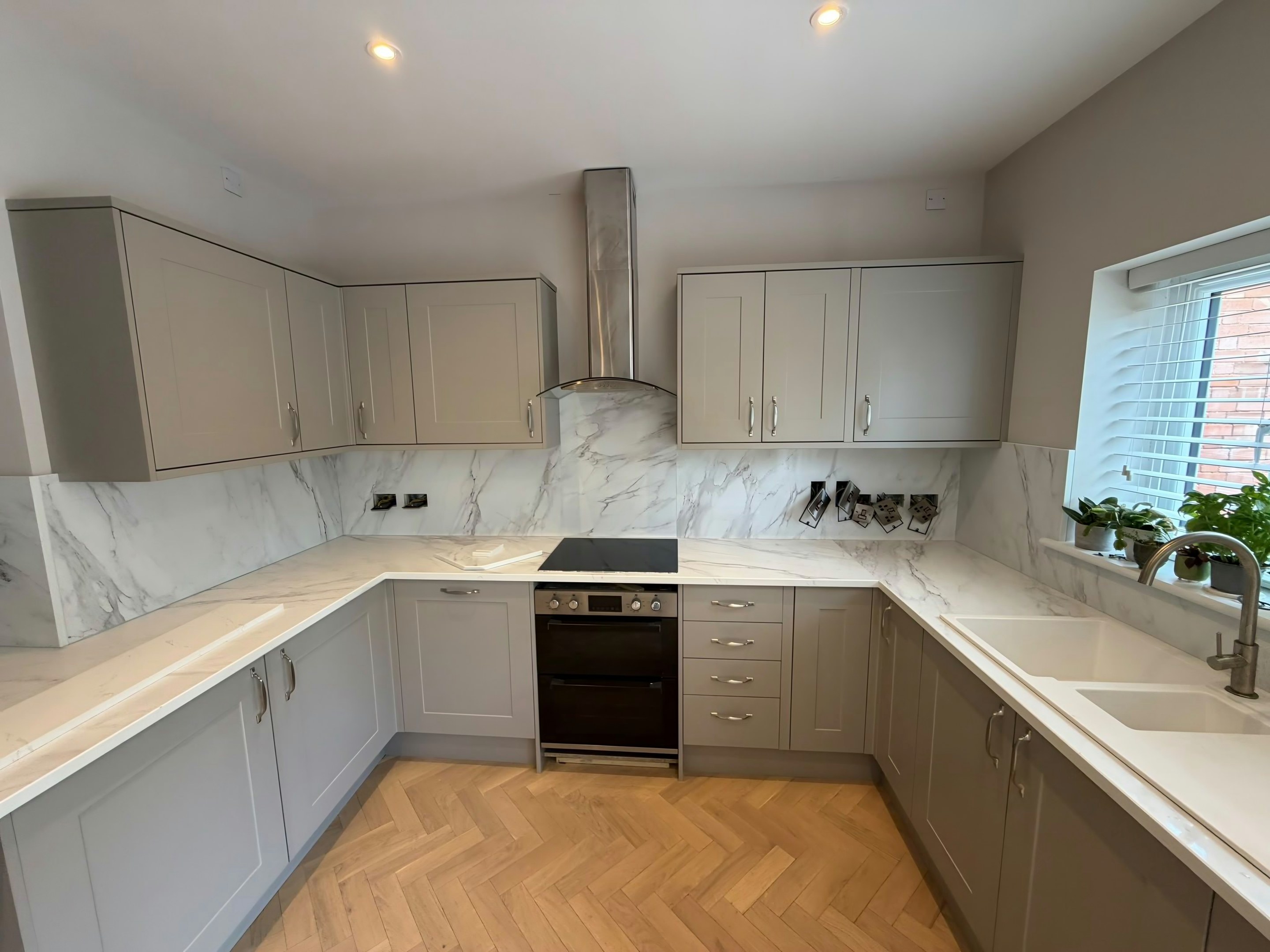
Floors are solid concrete under a screed, so nothing is packed by driving a fixing in and everything is packed by shimming. Protection down, dry-lay, scribe, then bond: the order matters more in a difficult room than an easy one. Older buildings get the extra hour.
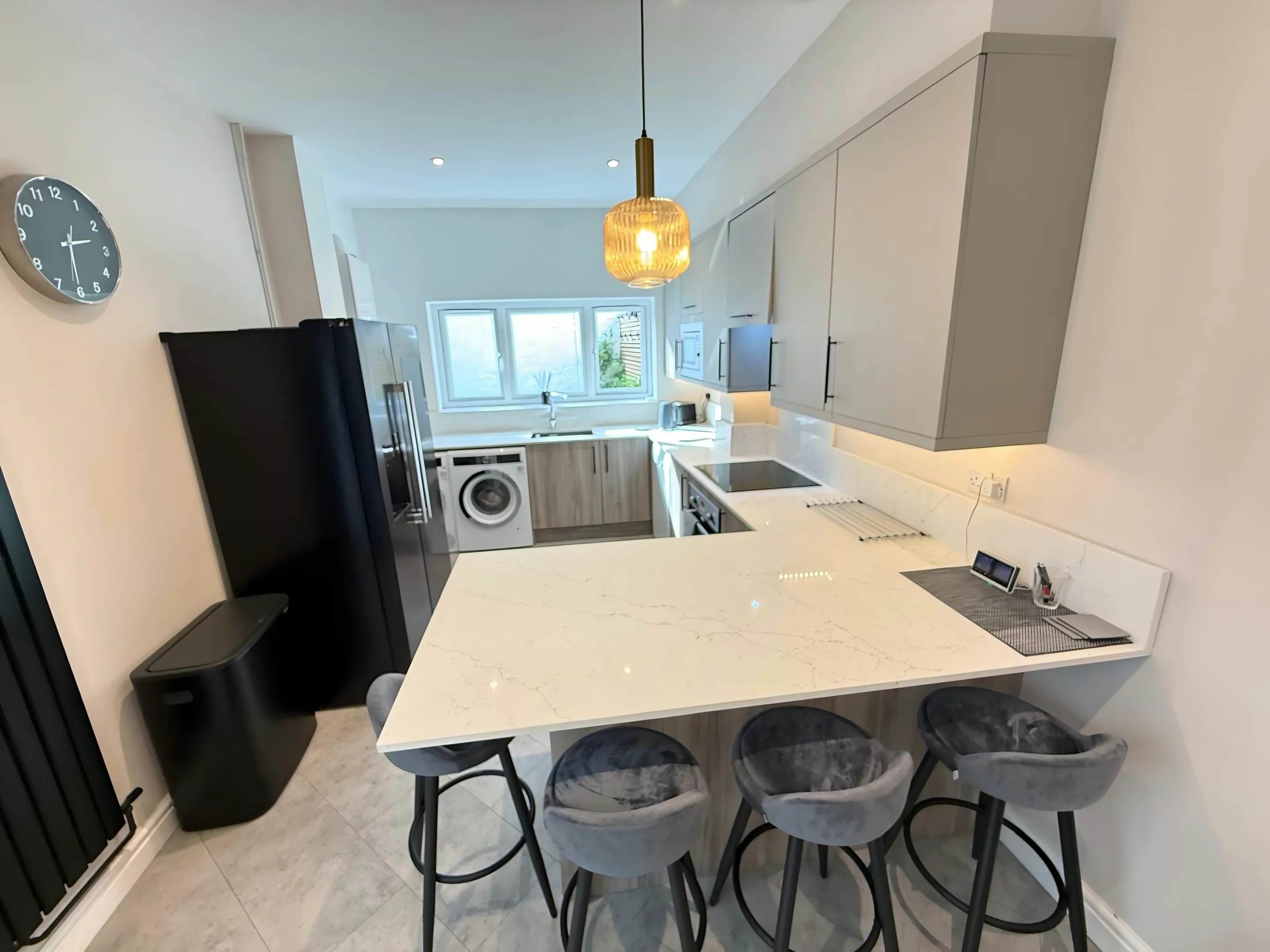
Interwar and post-war flats with small purpose-built kitchens, typically a 2.4m run with a second short return and a window over the sink.
Many still have the original layout including a larder recess that clients want turned into usable worktop. Estate courtyards with bollards and controlled gates, narrow internal stairwells, and lifts only in the taller blocks. Euston Road and Pancras Road are red routes, so unloading happens inside the estate or it does not happen at all.
Steel windows sit in narrow reveals with a slim cill, which leaves almost no depth for an upstand to return into. Noisy work is done inside the permitted hours and the quiet work fills the rest of the day. Movement joints in the shell stay movement joints.
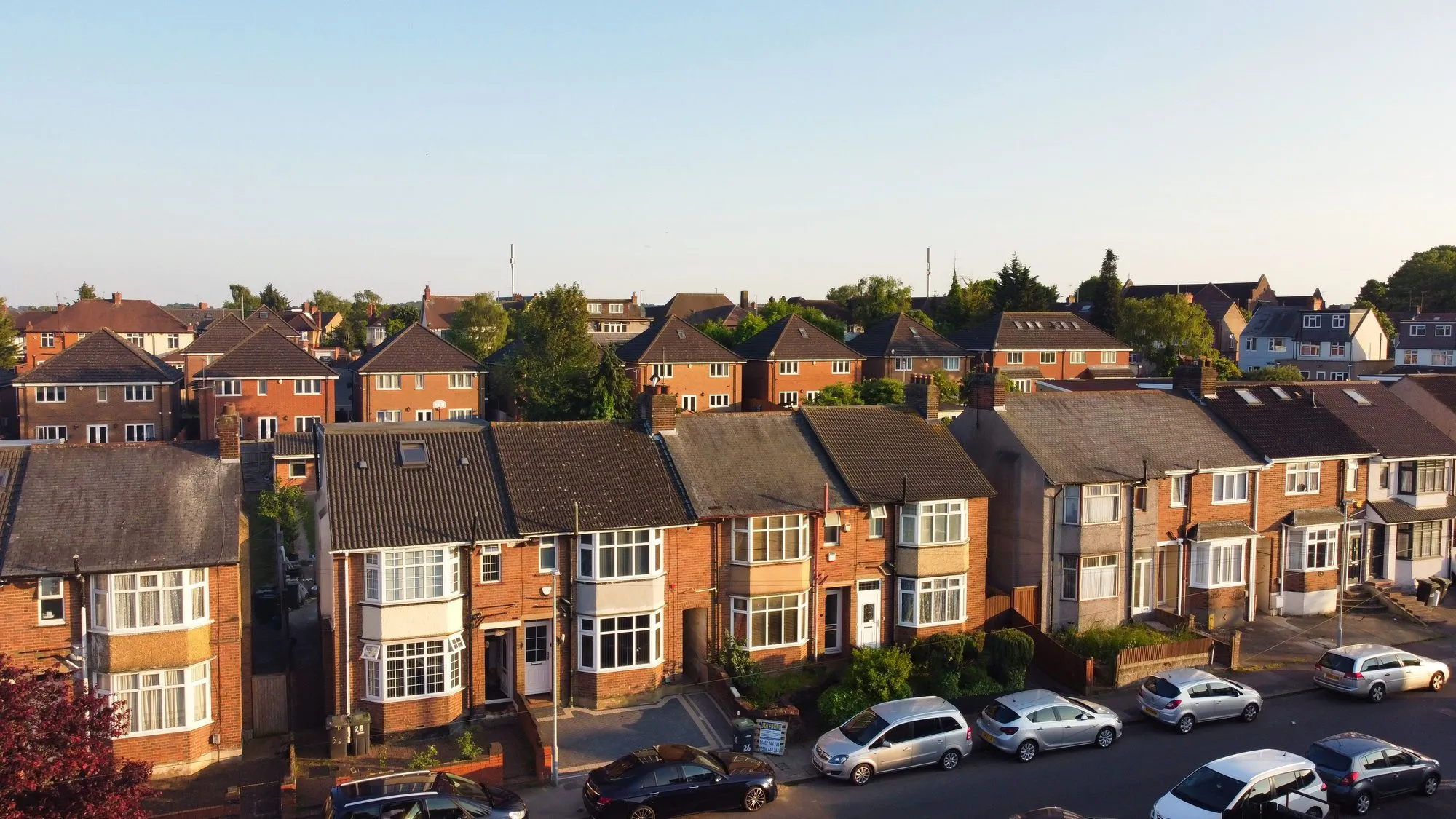
What the rooms sit inside, mostly, is interwar council block, post-war estate, Victorian terrace remnant and modern infill. That mix is why two jobs on the same road can run completely differently.